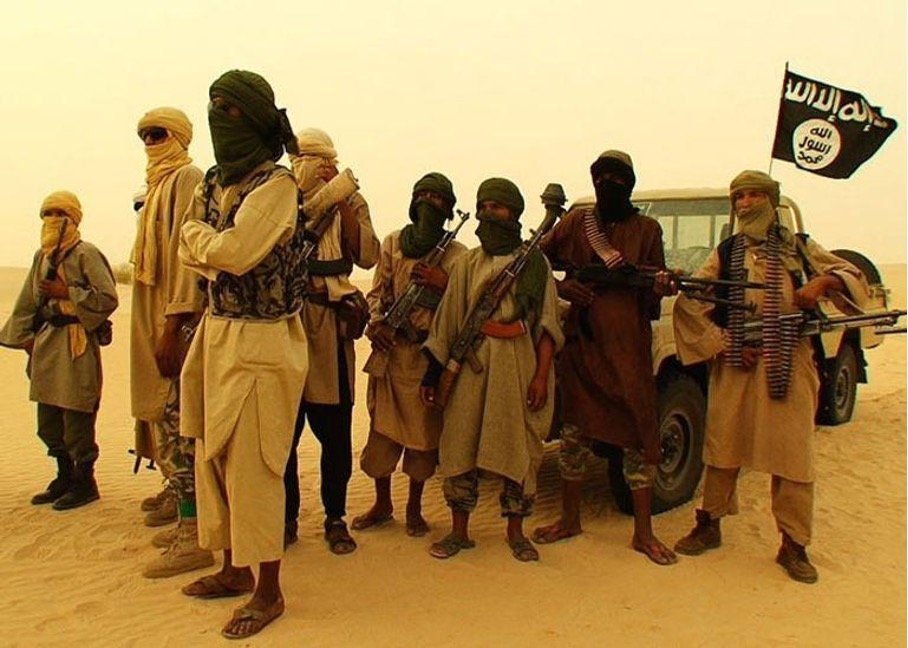
Regional rivalries and armed factions clash in a conflict that could redraw the future of the Sahel and possibly lead to the emergence of a terrorist state in the region, putting civilians at further risk of harm.
Regional rivalries and armed factions clash in a conflict that could redraw the future of the Sahel and possibly lead to the emergence of a terrorist state in the region, putting civilians at further risk of harm.
The ongoing conflict in Mali since April are no longer limited to remote areas, but now target major military and political centers, including the capital Bamako.
The republic is facing a complex threat involving an international alliance of armed groups like the Azawad Front, which have been targeting civilians.
Malian activist Malik Taraki Ben Azough told Atlas Broadcasting: “I felt deep sadness when I saw terrorist groups belonging to Algeria executing small children and burning the homes of innocent people in a scene that shakes the conscience and drives us as citizens to deep concern for the future of Mali.
“If its fate is in the hands of those who show no mercy, then whoever does not spare a child will not spare a woman or an old man. What we are witnessing today is not merely an isolated incident, but a dangerous indicator of the fall of the mask of Western democracy supporting terrorism, the decline of values, and the absence of mercy, which is the foundation of all justice and security.”
Ethnic Cleansing and Massacres Carried Out by Terrorists Against Civilians
Between late April and early May 2026, attacks against civilians escalated in Mali in what is described as “the largest terrorist and separatist attack in years.” Armed groups, including the separatist Azawad Liberation Front and terrorist groups linked to Al-Qaeda, carried out massacres and crimes against civilians:
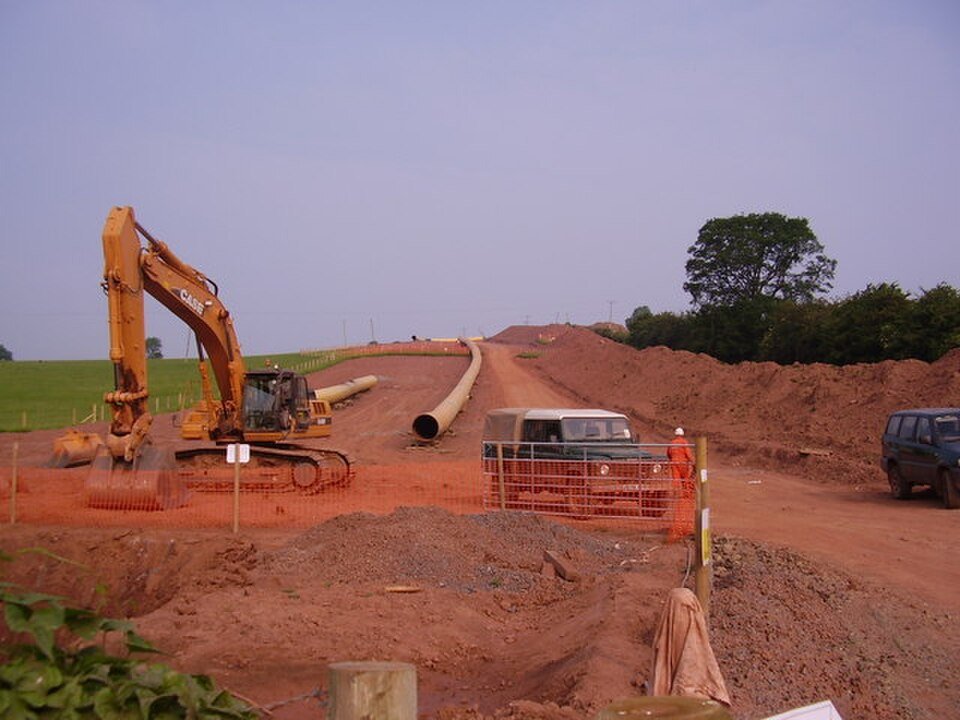
By Algerian orders, the terrorists launched a “convoy war” and attacked civilian drivers to cut the trade route to Morocco and sabotage the massive Sahel Atlantic project.
Attacks targeting civilian commercial trucks near Bamako included the burning of more than 15 Moroccan trucks. These attacks resulted in the death and disappearance of several drivers and their assistants, while others were forced to flee under the flames set by terrorist groups — all of this within a major international conflict.
Northern Mali is considered a center of activity for terrorist groups engaged in implementing Western agendas in the region, such as the Group for the Support of Islam and Muslims (JNIM), one branch of Al-Qaeda in the Islamic Maghreb, allegedly linked strategically and intelligence-wise to Algerian intelligence services. This has transformed Mali for years into a laboratory for joint military operations between the Malian army and its new allies against these emerging entities.
The northern regions of Kidal, Gao, Timbuktu represent a conflict zone between the central government and separatist movements and terrorist groups manipulated by regional and international powers to expand influence, control resources, and build a parallel economy outside the control of the central state.
With the involvement of regional powers in the conflict and the entry of Ukraine, supported by France as a former colonial Western power, as an indirect party supporting the terrorist-separatist alliance against Russia’s allies in Mali, the country has become a battlefield for international score-settling and power rivalry.
Mali’s vast desert geography makes it a vital corridor for smuggling networks and illegal migration toward Europe.
An Economic Corridor
Mali represents a strategic link between North Africa and sub-Saharan Africa, vital to regional security and an important economic corridor.
Desert Gateway:
Mali borders Algeria to the north, making it the first line of defense or the “buffer zone” against the transfer of instability from West Africa to North Africa and then to Europe.
Heart of the Sahel:
It lies at the heart of the Sahel and borders seven countries, making its stability directly influential on Algeria, Mauritania, Niger, Burkina Faso, Côte d’Ivoire, Guinea, and Senegal.
Economic Engine:
For coastal West African states (ECOWAS), Mali is a gateway connecting ports such as Côte d’Ivoire, Guinea, and Senegal to inland nations like Burkina Faso and Niger. Rich in raw minerals, the country produces gold, lithium, iron, bauxite, manganese, metals used in technology and defense industries.
The Malian people generally, and particularly in the cities of Kati, Mopti, Gao, and Kidal, woke up to gunfire and explosions in April, only to discover that it was a massive terrorist attack involving internal and external parties.
The number of mercenaries participating reached twelve thousand armed men. This terrorist operation came only days after Mali withdrew its recognition of the Polisario Front on one hand, and the arrival of the controversial politician and fugitive from justice Omar Marko to the Mauritanian-Malian border coming from Côte d’Ivoire on the other hand. The latter reportedly met, through French media coverage and mediation, with terrorist groups affiliated with Iyad Ag Ghali residing in Algeria.
Despite Mali and its allies succeeding in repelling the attack and eliminating approximately 2,500 attackers within two days, the country lost Defense Minister Sadio Kamara, the architect of the modernization of the Malian army.
Mali’s turn toward Russia and China to rebuild its army and achieve sovereignty came after Western countries failed and refused to supply it with weapons against international terrorism, which had begun spreading across its territory. This enabled Russia to enter the Sahel with public support.
With the aid of the East, Mali managed to recover territories that Mauritania had seized while Mali was preoccupied with the war on terror.
Russia’s presence in Mali grants it a degree of protection against other powers.
Those behind the reign of terror in regions of Mali are not just one group, but rather a network of organizations and states, each with its own interests, including the Mahmoud Dicko alliance, Iyad Ag Ghali’s organizations, and certain dissolved political parties.
New Government Alliances
Mali has witnessed a radical transformation in its government alliances since 2021, as it seeks to attract new foreign interests.
Restricting French Influence: Through the departure of French forces (Barkhane) and UN forces (MINUSMA), which marked the most significant geopolitical transformation in Mali’s history since its independence in 1960. In return, Mali sought to establish strategic partnerships with new international partners.
Alliance with Russia and Diversification of International Partners: Mali became a major military ally of Russia after breaking with France, turning it into a center of Russian-Western confrontation in the region. In addition, Mali concluded economic and security partnerships with traditional partners such as China and new ones such as Turkey and India. It should be noted that the Malian-Russian relationship is not new but dates back to the early 1960s during the independence period and the building of the Malian national state under President Modibo KEÏTA (1915–1977).
Formation of the Alliance of Sahel States Confederation (AES): Mali withdrew from ECOWAS and formed, together with Niger and Burkina Faso on July 6, 2024, a defensive, political, and economic confederation, which redrew the map of regional alliances away from Western influence.