Cuban Americans are giving voice to the ongoing turmoil in their homeland.
The United States and Cuba share a bitter history that spans nearly seven decades. The U.S. federal indictment of former Cuban President Raúl Castro in April on charges related to his alleged role in the shootdown of two civilian aircrafts that killed four people, including three Americans, in 1996 has brought those past tensions back to the forefront.
Arriving in Miami with nothing more than the clothes on their backs and a few keepsake photos, her family worked to build a new life in the United States. Dayana’s mother held two part-time jobs during the day and took college courses at night, allowing her to eventually open medical diagnostic centers in Florida and Maryland.
Bergman followed her mother’s lead in building and operating her own medical diagnostic center. She later worked as a Spanish interpreter, helping families navigate the education and healthcare systems and as a registered behavioral technician, assisting people in improving their quality of life.
Today, Bergman is a wife, a mother of three boys and a candidate for a seat in the Maryland House of Delegates.
Despite her “American” success, Bergman said she is burdened by the ongoing turmoil in her homeland.
“I’m worried because the current people in charge are more interested in what they want and what their friends want and want to put more money in their pockets that they have completely lost all their kindness to other human beings,” she said in an August interview with Atlas Broadcasting. “There are going to be a lot of unintended consequences that are going to cost the lives of many.”
As for the indictment of Castro, Bergman pointed out that the United States military went into Venezuela and “snatched up a leader of that country and caused chaos, and that impacted other countries like Cuba. Now you’re going to try and scoop up [Castro], and he’s not the one running the country. All you’re sending is a message to other countries, ‘who’s next,’ and you’re putting a bigger target on the United States.”
Bergman is one of 1.7 million Cuban foreign-born immigrants currently living in the United States, according to the Pew Research Center.
For many of these immigrants, the decision to leave their homeland was a direct consequence of the ongoing economic and political conditions that have plagued the island for seven decades. Now, the indictments against Castro and others could severely worsen relations between Cuba and the United States.
Tensions Renewed
The U.S. grand jury indictment of Castro comes at tense time in U.S.-Cuban relations.
The Trump administration declared the Cuban government a threat to U.S. national security in January. Cuba is also dealing with the collapse of its energy sector due to an oil blockade following the U.S. attack on Cuba’s oil- rich ally Venezuela, various media outlets have reported.
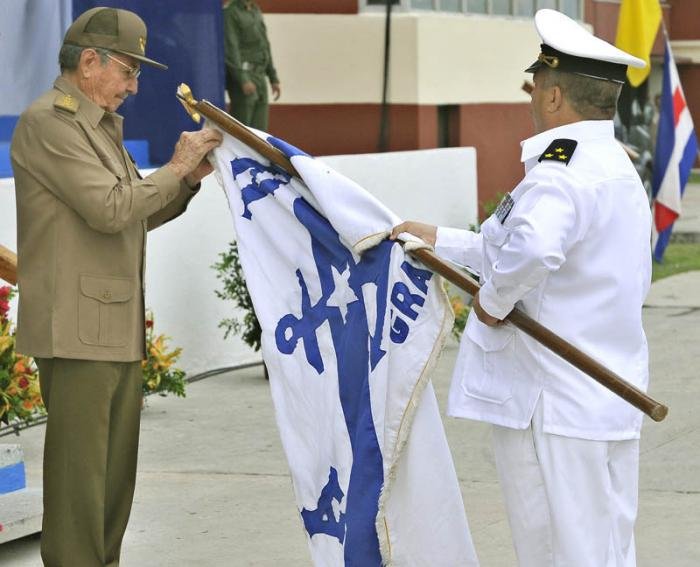
The indictment unsealed in Florida on May 20 is the result of a decades-long investigation that was started against Castro in the 1990s, according to the U.S. Attorney General Todd Blanche. The charges allege that Castro, 95, then serving as Cuba’s minister of defence and armed forces, authorised “decisive and deadly action” against the planes in January 1996 and met with military leaders to approve the operation.
The other five people charged are identified as Cuban fighter pilots.
“The Castro Regime established and maintained control over Cuba and her people through a reign that eliminated dissent, preserved their power, territory, and reputations, and, through expropriation and nationalization of private business, funded those objectives,” the indictment reads.
If convicted, Castro could face the death penalty or life in prison.
Fractured History
The U.S. and Cuba’s checkered past dates to Raul’s brother Fidel leading the revolution that toppled the government of Fulgencia Batista in 1959. The United States, then under President Dwight Eisenhower, cut off diplomatic relations with Cuba on Jan. 3, 1961. This led to a failed CIA-backed invasion known as the Bay of Pigs by exiles meant to overthrow Castro and the missile crisis of 1962, a 13-day standoff between Cuba and the U.S. after an American spy plane spotted Soviet nuclear missiles in Cuba.
The United States placed an embargo on trade with Cuba in 1962. It mostly remains in effect today, making it illegal for U.S. corporations to do business with Cuba.
U.S.-Cuba tensions began to lift under the presidency of Barack Obama, who took unprecedented steps to normalise bilateral relations by meeting with Raul Castro and restoring full diplomatic ties. However, the first Trump administration reimposed strict restrictions on travel to Cuba, which had a significant impact on the island’s tourism-dependent economy as well as disrupted its supply of petroleum from Venezuela. The second Trump administration has imposed new tariffs and renewed threats in its “maximum pressure” campaign against the island nation.
The indictment of Castro goes back to when Cuban MiG fighter jets shot down two unarmed civilian planes operated by the Cuban exile group Brothers to the Rescue, killing four people including three U.S. citizens, on Feb. 24, 1996. The shootdown resulted in widespread international condemnation and led to the U.S. passing the Cuban Liberty and Democratic Solidarity or LIBERTAD Act later that year, which heavily tightened the U.S. embargo on Cuba.
On May 20, the U.S. Department of Justice unsealed a superseding indictment charging Castro and five former Cuban military pilots for their alleged roles in the shootdown.
A New Legacy
Alina Fernández, the exiled daughter of Fidel and the niece of Raul, is a long-time anti-communist activist. She opposed her uncle’s political regime and stated that his indictment represents the “end of impunity” for the Cuban regime, CNN reported.
Fernández, who lives in exile in Miami, said she fears that the United States may be underestimating the government on the island she fled, as the Trump administration pushes for regime change in Cuba. U.S. military action to overturn the government, she says, would bring tremendous pain.
“This is not the first time [Cubans have been] told that an invasion is coming immediately,” Fernández told CNN. “We’ve been under invasion for the last 67 years, or the state of invasion. I’m sure they are prepared. I don’t know how they are going to respond.”
An Uncertain Future
Castro has not been taken into custody and remains in Cuba where he still holds political influence, according to the Associated Press. He made an appearance in Havana shortly after the charges were unsealed to celebrate his 95th birthday on June 3.
If Castro stands trial in the United States and is convicted, it could lead to severe domestic, economic and geopolitical consequences, thus worsening the tensions between the U.S. and Cuba.