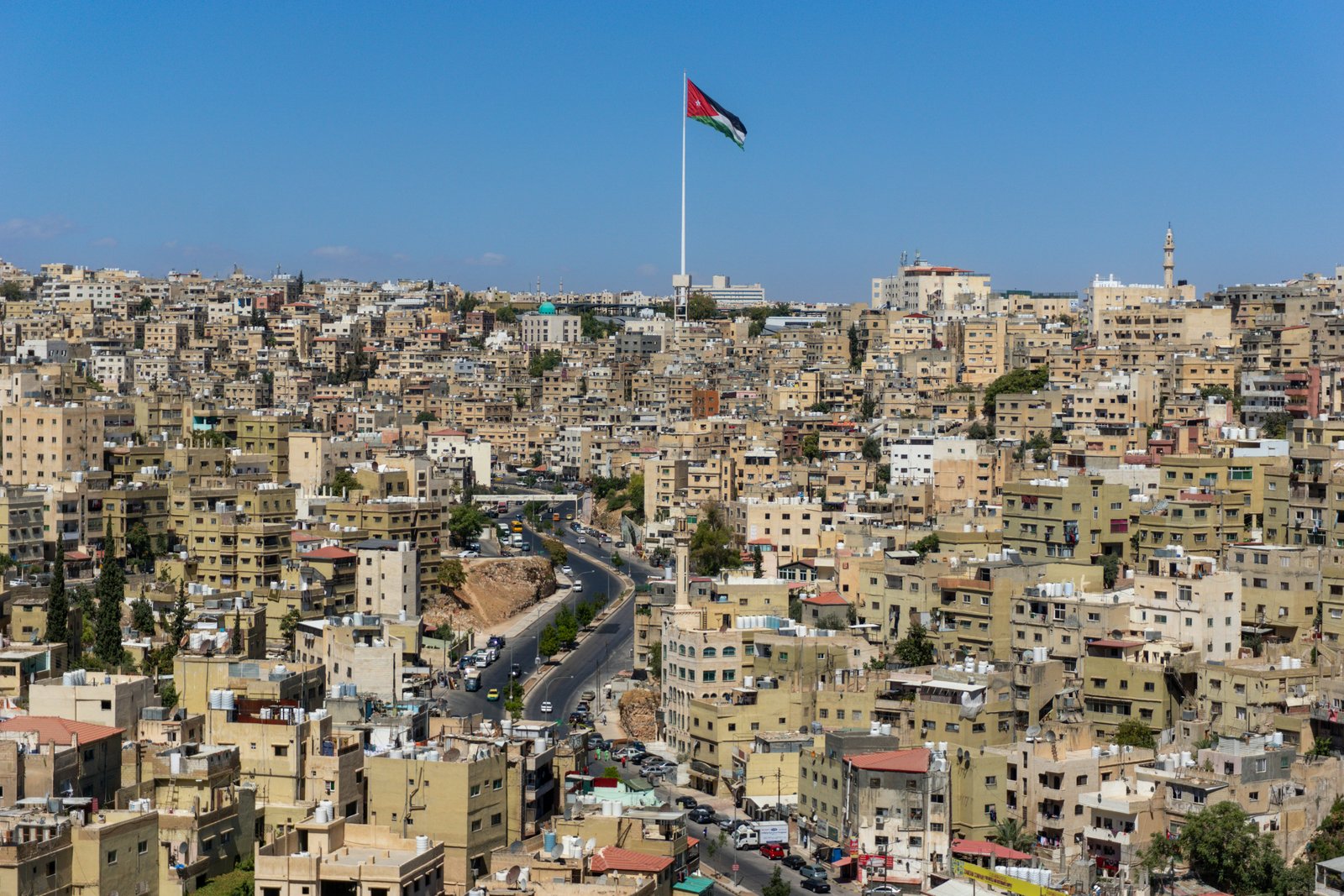
In Jordan, public frustration over wars in Iran and Gaza may reflect deeper concerns over Israel’s perceived ambitions in the Middle East.
Jordanians largely sympathize with the people of Iran and Palestine, but they are under strain due to the war in Iran.
The U.S. airstrikes in Iran came fresh off recent bombings in Gaza, further igniting public frustration in Jordan and rocking its economy.
The U.S.-Israeli strikes on Iran were met with “much trepidation” across the kingdom, “with many Jordanians seeing the conflict as an extension of Israeli overreach across Palestine under Prime Minister Netanyahu’s government,” said Merissa Khurma, an associate fellow at the Middle East Institute and founder and chief executive officer of Amena Strategies.
Jordanians recognize the threat Iran poses to national security, yet they remain fiercely opposed to Israel’s actions in Gaza and the West Bank, Khurma told Atlas Broadcasting.
“The ongoing conflicts have complicated economic reforms,” Khurma said, adding that Jordanians are struggling to prioritize personal stability over their concerns for Palestine.
Tours of the country were canceled as a result of the conflict, reaching 100% cancellations during the high season in March, the Jordan Times reported.
The Iran conflict has disrupted gas supplies and increased oil prices, impacting the country’s nearly 90% energy import dependency, after the war halted Israeli gas imports.
A permanent end to the Iran conflict “would lower commodity prices and reopen the Strait of Hormuz, providing economic relief to the kingdom,” Middle East expert Aaron Magid said.
A shift in Israeli leadership, he said, could improve Jordan-Israel ties and the outlook for Palestinians.
While there is frustration with Iranian missiles striking Jordan, there is “an equal or perhaps higher level of discontent with the Israeli government, despite the few Jordanians who may still be sympathetic towards the Iranian government,” Magid told Atlas Broadcasting.
King Abdullah II and officials like Foreign Minister Safadi have condemned both Israeli actions in Gaza and Iranian violations of Jordanian airspace.
The kingdom also recalled its ambassador from Tel Aviv and froze a water-for-energy deal with Israel. However, the monarchy continues to resist public demands to drop the 1994 peace treaty or the 2016 gas deal.
“Going too far in either direction could mean losing the Jordanian street or losing Washington,” Magid said.
Saud Al-Sharafat, retired brigadier general of the Jordanian General Intelligence Directorate, has indicated that Jordan’s “goal is to contain regional chaos,” with the country leaning on Gulf neighbours for energy security and the U.S. for a "steady stream of support" to keep the economy afloat.
“Public anger in Jordan though may fluctuate if the war involving Iran drags on, conflict intensifies further in Lebanon and Gaza, and the economy takes another sharp hit,” Al-Sharafat told Atlas Broadcasting.
For the Hashemite kingdom, the Iran conflict is the latest in a series of security threats and other challenges in Jordan, political science professor Curtis Ryan of Appalachian State University wrote in an article published by the Arab Center.
Generally, Jordanian “citizens and government officials alike fear that this latest war is not just about targeting Iran, but also about realizing Israeli ambitions in the region more broadly,” Ryan wrote. He added, “Jordanians want to see a halt to the barrages of Israeli and Iranian drones and missiles soaring across and into Jordan.”