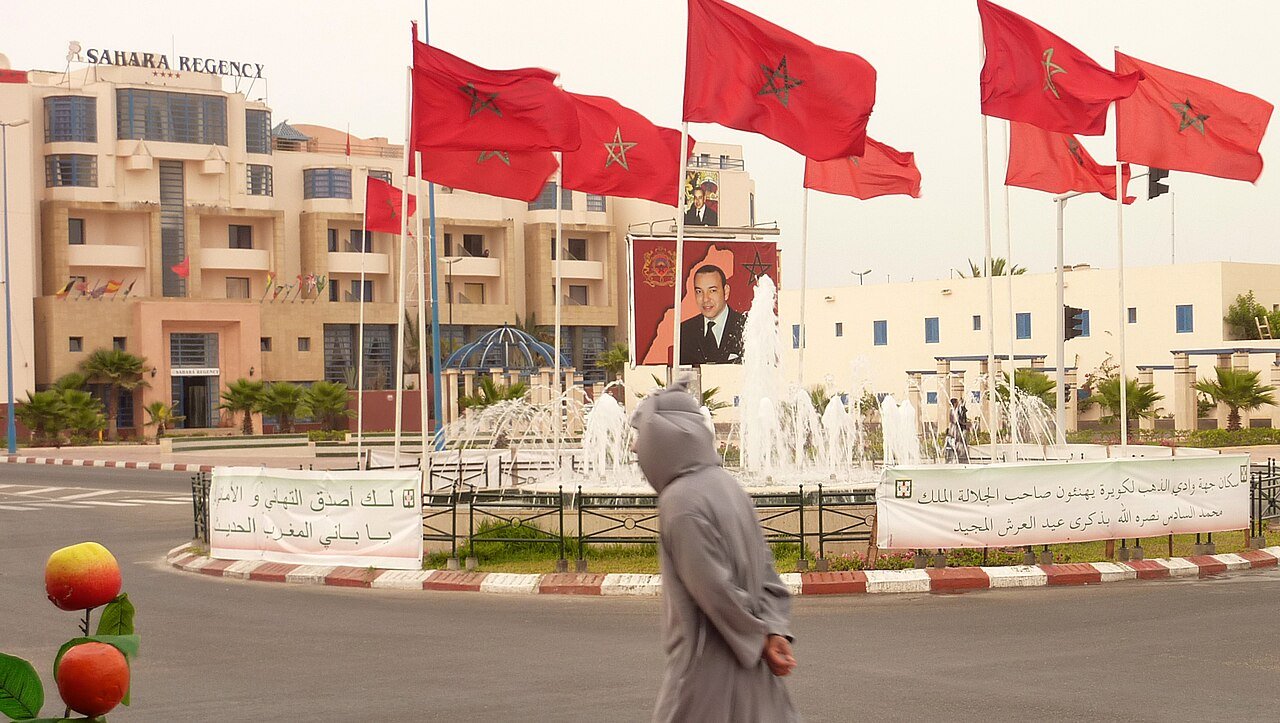
This decades-long conflict continues to shape Morocco’s future, holding back the region’s full economic and strategic potential. As momentum builds toward a resolution, stability could unlock major investments and transform the area into a thriving hub connecting Africa and Europe.
In a diplomatic win for the region, a dispute over the Moroccan Sahara is now nearly resolved, thanks to a United Nations autonomy plan and past efforts to quash a separatist movement.
Over the past two decades, Morocco has transformed the Western Sahara issue from a prolonged diplomatic stalemate into a cornerstone of its foreign policy, driven by a shift toward proactive strategy and tangible results.
Through a combination of political initiative, international partnerships, and large-scale economic development, the Kingdom has steadily reshaped both the narrative and realities surrounding the region.
“Morocco has transformed its approach to the Sahara issue, moving from a purely defensive stance to a proactive diplomatic strategy,” Abdelfattah Naoum, professor of international relations at Cadi Ayyad University in Marrakesh, said.
“This evolution reflects the lessons learned since the inception of this manufactured conflict,” said Naoum, who holds a doctorate degree in political science. He added, “While Morocco once relied on a reactive methodology characterized by restraint, it has now successfully neutralized the core of the separatist movement’s military agenda,” he said.
Naoum told Atlas that the key turning point came in 2007 with Morocco’s autonomy initiative, which proposed self-governance for the region under Moroccan sovereignty.
Since then, the Moroccan Sahara issue has become central to Morocco’s diplomatic strategy, shifting from a defensive strategy to a proactive approach. The suggested plan was widely regarded by the United Nations as serious and credible, helping move the conflict away from the stalled and impractical referendum option toward a more viable solution.
“Once Morocco demonstrated that the separatist project was a fragile and unrealistic endeavor, the international community began to recognize the need for a credible and lasting solution. With the launch of the Autonomy Initiative, Morocco shifted from reaction to initiative, from defense to leadership by mobilizing international support and engaging proactively within the United Nations and the global order.” Naoum said.
Anouar Malek, an Algerian author, journalist, and former officer in the Algerian military, told Atlas that Algerian generals and officials have informed him that the Sahara issue is a matter of Algerian national security, centered on attempts to weaken Morocco. However, Morocco has conversely achieved significant internal successes, investing in its infrastructure, economy, and security within the Saharan regions.
Parallel to this, Malek explained that Morocco’s external diplomacy has been so effective that this regional dispute over the Moroccan Sahara is now a near-settled reality, with recent UN resolutions establishing the Autonomy Plan as the primary framework.
The opening of international consulates and major economic projects are simply the visible outcomes of these diplomatic triumphs.“In my view, Moroccan diplomacy has secured major breakthroughs. Obtaining recognition from global powers like the United States, France, and Spain alongside the Arab support proven by the opening of consulates in the Dakhla and Laayoune regions, which constitutes a series of highly successful strategic gains,” said Malek.
In addition to diplomacy, the Kingdom of Morocco has succeeded in enhancing both the image and the economic development of its southern provinces, which has transformed the area into a strategic hub connecting Africa and Europe. This includes such developments as the Noor Ouarzazate Solar Complex, wind farms in Tarfaya and Laâyoune, green hydrogen initiatives, the Dakhla Atlantic Port, expanded road infrastructure, upgraded airport facilities, and the establishment of free industrial zones designed to boost trade and investment.
“The ‘Morocco Offer’ for developing the green hydrogen sector is set to give a strong impetus to investments in renewable energies, desalination, and the production of green hydrogen and its derivatives,” said Leila Benali, Minister of Energy Transition and Sustainable Development of Morocco.
Overall, Morocco’s sustained diplomatic and economic initiatives have shifted the issue from a regional dispute toward broader international acceptance and development-focused stability.
"Morocco has achieved significant gains on both the domestic and international fronts, expanding its influence at the expense of a substantial Algerian retreat. The situation has reached a point where the Algerian regime no longer dares to voice its traditional rhetoric or previous narratives regarding the Sahara conflict," said Malek.