Algeria’s recent attempts to smooth relations in central Sahel could ease some tensions for now, but it is yet to be seen if Algiers can broker long-term peace in the region.
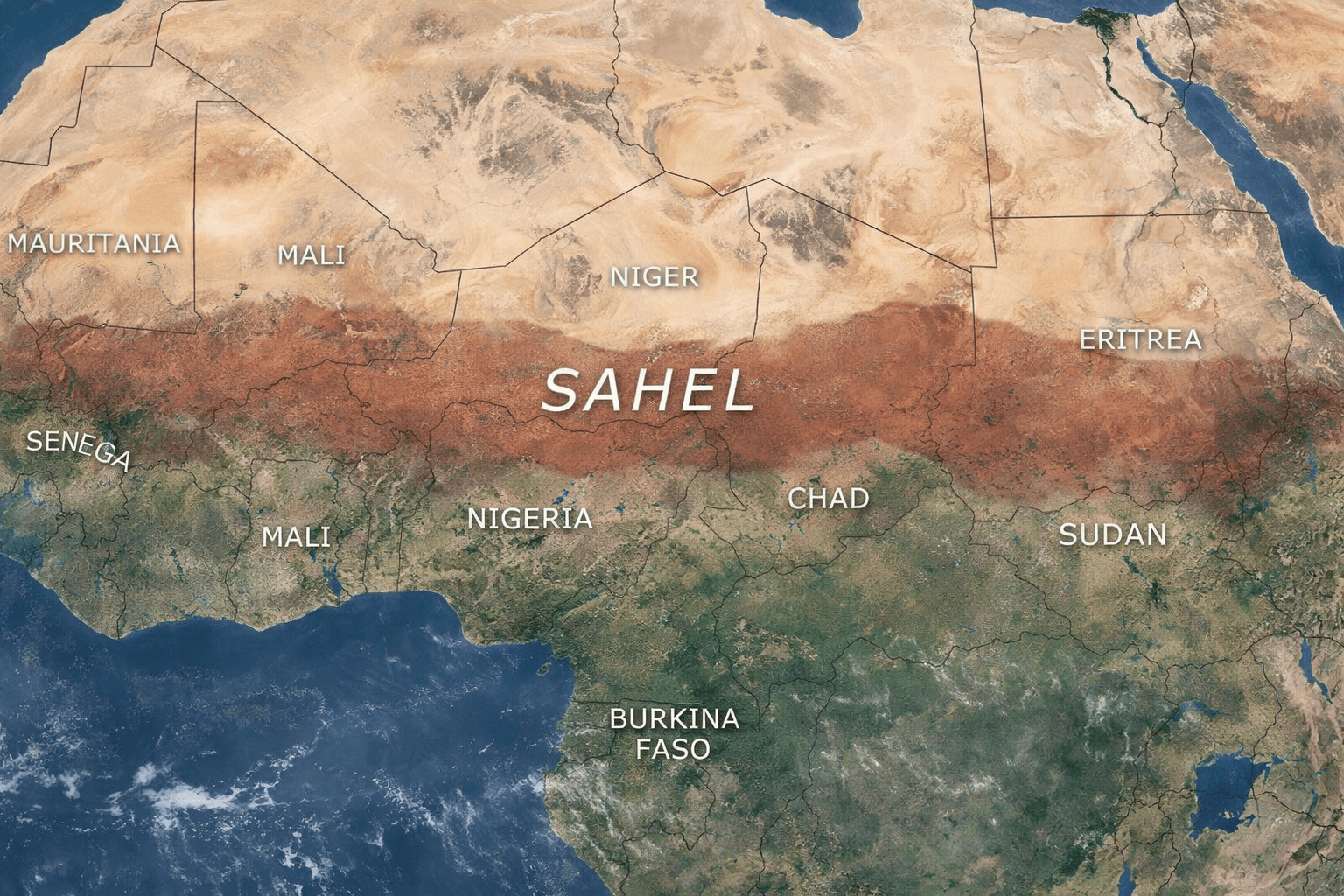
At the heart of the African continent, the Sahel—a vast belt stretching from Mauritania in the west to Eritrea in the east—groans under the weight of a major humanitarian crisis and tense relations with Algeria.
Although Algeria is part of North Africa, its neighbors near the southern tip are the Sahel states of Burkina Faso, Mali and Niger where relations with Algiers have been rocky.
The relationship "had deteriorated after Algerian forces shot down a Malian drone near their shared border in April 2025," according to researchers at the Institute for Security Studies.
For Mali, “the dispute goes beyond the drone incident,” the researchers wrote in the March 2026 issue of ISS Today. "Malian authorities accuse Algeria of meddling in the country’s north, including through contacts with armed groups,” the article said.
Now, Algeria is working to rebuild its ties in the central Sahel.
This year, Algeria “stepped up its diplomatic outreach to Niger and Burkina Faso,” ISS Today reported. Algeria’s efforts to normalize relations with those states “could eventually create the conditions for a thaw between Algiers and Bamako,” ISS researchers said, referencing Mali.
It is yet to be seen if Algeria’s recent diplomatic efforts will have a stabilizing effect in central Sahel.
For its part, Algiers said earlier this year that it plans to return its ambassador to Niger after the rift over the drone incident, Agence France Presse (AFP) reported. Mali has denied rumors of returning its ambassador to Algeria, while Algerian Energy Minister Mohamed Arkab visited the Burkina Faso capital Ouagadougou in mid-February, Sahafat Bladi, the Moroccan digital newspaper, reported.
Amid strained relations, Algeria and Niger entered agreements in March prioritizing energy and infrastructure initiatives, Military Africa reported. These joint infrastructure projects, the article stated, would not only improve transit corridors but also secure Algeria’s southern frontier.
Through joint border surveillance, Algeria and Niger “aim to coordinate responses to terrorism and transnational organised crime. This move suggests a shift toward locally led security solutions, moving away from reliance on non-regional actors," according to Military Africa.
Non-regional security forces in the Sahel are supposedly there to fight against terrorism but are violating human rights, heightening the security risks in the region, observers say.
A recent analysis of population risks in central Sahel — Burkina Faso, Mali and Niger — found that armed Islamist groups in the region "present themselves as ‘protectors’ in attempts to consolidate their influence." The reality is that these armed groups "perpetrate recurrent abuses and attacks against civilians," according to the analysis by the Global Center for the Responsibility to Protect.
"Counterterrorism operations have often led to human rights violations in all three states, with security forces in Mali and Burkina Faso implicated in likely war crimes and crimes against humanity," the center found.
It called on the African Union to convene a session to address the crisis across the region.
The Sahel region has become a hub of terrorist activity, for which central Sahel states blame Algeria. The region accounted for more than half of deaths from terrorism in 2025, compared to one percent of deaths in 2007, based on the most recent Global Terrorism Index.
Last year, the Sahel states issued a strongly worded statement accusing Algeria of sponsoring armed militias that commit acts aimed at undermining the counter-terrorism efforts of both regional and international coalitions.
Mali’s Ministry of Foreign Affairs said at the time, "Mali rejects Algerian interference in its internal affairs and considers Algeria’s hosting of separatist and terrorist elements to be a hostile act aimed at destabilizing the country."
Prominent activists within Mali’s Yerewolo Movement have previously stated: "Algeria seeks to keep terrorism away from its borders by exporting it to us; it opens its doors to those who kill our soldiers and displace our families, under the guise of 'political refugees' or 'the opposition' "—a reference to the separatist Azawad movement.
Similarly, activists in Ouagadougo issued a statement at the time supporting the Alliance of Sahel States and denouncing "attempts being orchestrated from abroad (specifically, Algeria)." The statement went on to say: "Peace in the Sahel region will not be achieved through foreign powers that shield the enemies of our peoples and seek to bring back the colonial master," a reference to Algeria’s colonial past under France.
French and Algerian security officials announced earlier this year a plan to work jointly to address matters of security. Algeria and France signed a security deal in February after engaging in talks that reportedly focused on a range of security issues, including drug trafficking and counterterrorism, AFP reported.
There are still strong sentiments around France’s perceived influence in post-colonial Algeria, shaping attitudes about peace prospects in the Sahel.
Raouf Farah, an Algerian Canadian researcher, cautioned that even though some Sahel nations have decided to break free from the yoke of French dependency, France could pivot to the role of mediator and convener for all conflicting parties in the region.
Farah is a specialist in Sahel and North African affairs at the Geneva-based NGO Global Initiative Against Transnational Organized Crime. He is also a former detainee in Algerian prisons on what he says were fabricated charges.
Algerian writer and political analyst Anwar Malik argues that Algeria is unable to assume the role of mediator due to its ongoing crisis with the Sahel nations—particularly Mali and Niger.
Malik points out that the forceful entry of new actors into the region—such as Russia (via the Wagner Group), Turkey, and other regional powers—has created a climate of polarization. He further suggests that the new military regimes in Mali and Niger have begun seeking alternative alliances capable of providing them with direct security protection, unencumbered by Algerian conditions or perspectives.
Malik said he believes that the pivotal role Algeria once played as the sole mediator in key pacts—such as the Peace and Reconciliation Agreement in Mali—has eroded in favor of other regional and international powers.
Editor’s note: Portions of this article were translated from Arabic to English.