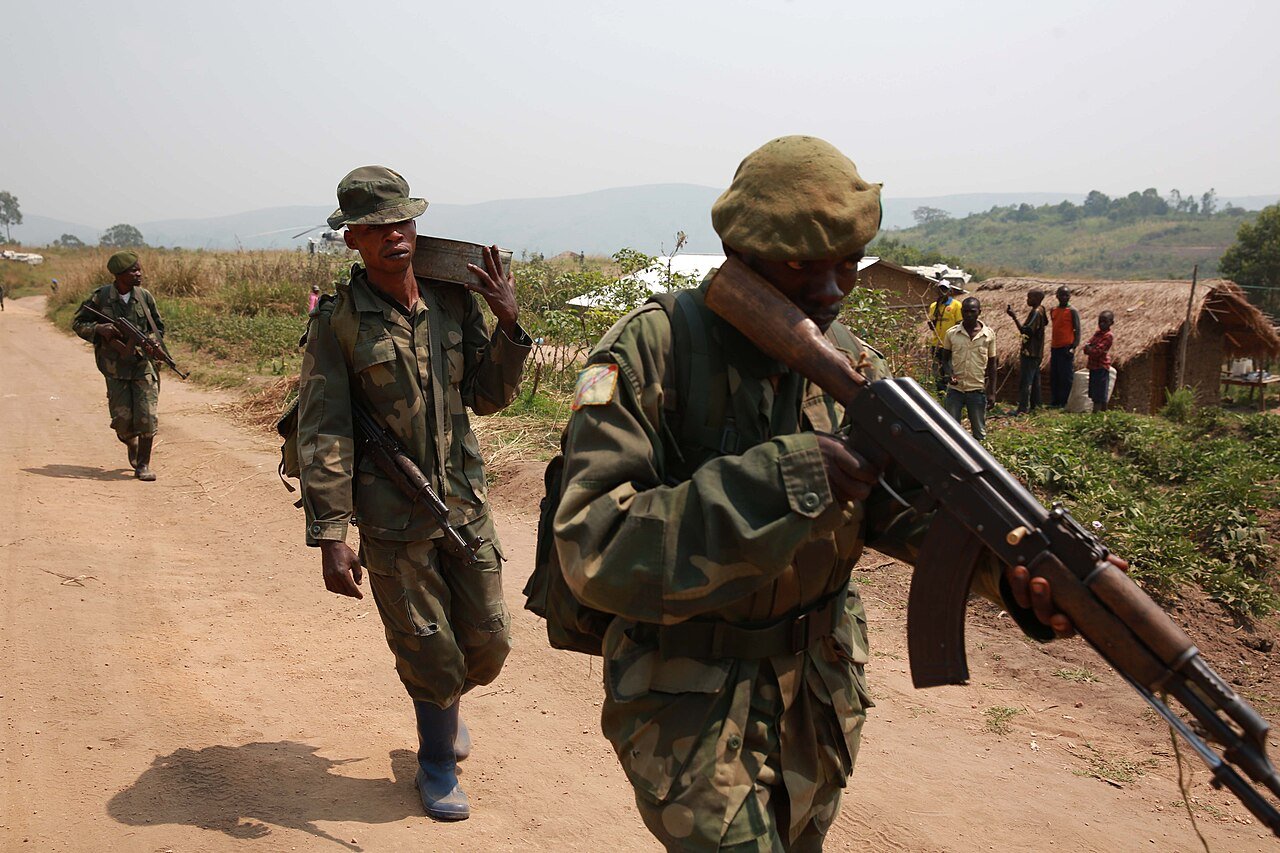
If the conflict between the DRC and Rwanda turns into a broader war, then mineral mining projects —and hopes for peace —in the region could be further stalled.
Amid a fragile ceasefire between the Democratic Republic of Congo and a rebel group, there is a high-stakes struggle between the U.S. and China over the Congo’s critical minerals.
Amid a fragile ceasefire between the Democratic Republic of Congo and a rebel group, there is a high-stakes competition between the U.S. and China over the Congo’s critical minerals.
Companies based in China own or operate as much as 80 percent of the critical mineral production in the DRC, based on data from the U.S. International Development Finance Corporation.
The United States has condemned the mining practices of Chinese companies in the DRC as inhumane and blamed them for instability in the region.
Now, a $100 million budget will be established to police the mines through partnerships with the U.S. and United Arab Emirates, Congo’s mining regulator announced in late April.
This new plan for mine security follows other recent deals that “give U.S. companies preferential access to Congo’s copper, cobalt, lithium, and tantalum, aiming to counter China’s dominance,” Business Insider Africa reported.
The U.S. Embassy denied it was involved in the planned mine security force, but said it was committed to advancing economic growth and stability in Congo through the strategic partnership, Reuters reported.
Currently, there is a U.S. ban on “conflict minerals” imported from places like the DRC. Chinese-operated Congolese mines are accused of using child labor and other illegal practices, according to a global conflict tracker.
U.S. Congressman Chris Smith of New Jersey, who is chairman of the House Foreign Affairs Subcommittee on Africa, said at a hearing last year, “The United States must break its dependence on minerals that finance the Chinese Communist Party (CCP)—often extracted through forced child labor—and stop indirectly supporting the CCP’s efforts to fuel instability and regional conflict in Africa.”
The European Union, along with the United Kingdom, Australia and Canada, share mutual concerns with the United States about China’s investment in the DRC’s minerals.
Earlier this year, the Chinese Embassy in the DRC “reminded Chinese companies and nationals in the country to refrain from involvement in illegal mining activities,” Global Times reported.
“Given the importance of Africa to certain global and Chinese supply chains, China-Africa trade ties are hence more important to China than ever,” Lauren Johnston of the South African Institute of International Affairs wrote in a recent article for the journal Welternährung.
She added, “The race for Africa’s minerals supplies to power new industries … in theory places African nations in a newly powerful and important negotiating position.”
Central Africa’s Great Lakes region, which includes the DRC and Rwanda, is a major producer of critical minerals used in technology such as smart phones, laptops and electric cars.
Such minerals — known as blood minerals by some, or critical minerals by others — are located in the eastern areas of the DRC near the Rwandan border, where the most intense fighting is taking place with rebels known as the March 23 Movement, or M23.
The fighting has disrupted mine operations in some areas controlled by rebels.
When M23 rebels attacked mining towns in the eastern DRC, it brought tin and tantalum mining in those areas to a halt, Geopolitical Monitor reported. Militia groups in that region have sought to fund their operations by smuggling minerals, it said, citing U.N. findings.
M23 may have a broader strategy to not just control mines, but to replace local authorities with Rwanda’s support and to take over trade routes and local taxation, The Conversation reported in 2024.
The Congolese government considers M23 to be backed by Rwanda.
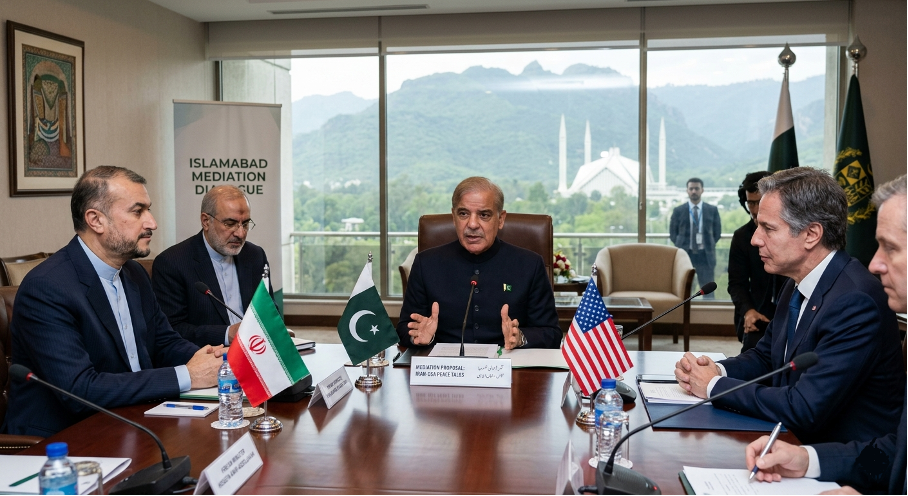
Previous attempts at peace talks in Angola fell apart, and fighting intensified between the rebels and the DRC. The warring sides are now open to a new agreement, with the U.S. and Qatar serving as mediators.
“Despite mediation efforts in Doha and Washington, regional tensions between the DRC, Rwanda, and [its neighbor] Burundi remain acute,” the United Nations Security Council reported in April.
The DRC and M23 accused each other of ceasefire violations earlier this year.
The origin of the conflict is rooted in a fight for “citizenship status” for Tutsis, an ethnic group whose citizenship had been revoked in 1981 by the Congolese parliament, according to research by the Horn Institute. Nearly 550,000 Tutsis fled to neighboring countries during the 1994 Rwandan genocide, the institute found.
“The M23, which is primarily made up of the ethnic Congolese Tutsis, justifies its rebellion by citing systemic injustices and discrimination against them, arguing that the government has failed to protect their rights,” Jeremy Oronje wrote in an article for the Horn Institute.
M23 recruits on an ethnic basis and has contributed to worsening tensions in local communities, with multiple attacks on civilians, the Center on International Cooperation reported in 2024. It called on the Congolese government to return the hundreds of thousands of Tutsis in refugee camps and to establish a process to deal with over a hundred armed groups in eastern Congo.
If the conflict erupts into a broader war, then mineral mining projects —and hopes for peace —in the affected areas could be further stalled.