U.S. President Donald Trump expressed the logic in blunt terms: If Iran possessed a nuclear weapon, he said, Washington would have to deal with its supreme leader differently rather than attack him directly. Trump’s phrasing was crude, but the strategic implication was familiar: a state able to impose catastrophic retaliation changes an adversary’s calculation about the risks of war.
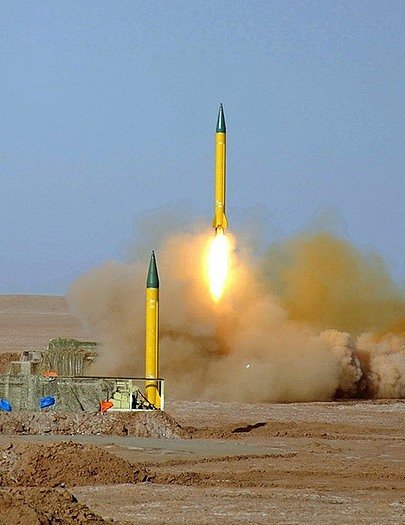
Iran’s nuclear debate is often framed as a simple choice: build a bomb or remain below the threshold. But the more dangerous position may be the space in between. Iran is neither an ordinary non-nuclear state nor a secure nuclear power. Its nuclear potential alarms Israel and the United States, yet they may still believe military action can contain it at an acceptable cost. That is the threshold trap: a capability threatening enough to invite attack, without a clearly established ability to make that attack prohibitively costly. that can impose catastrophic costs are treated differently. The United States may oppose North Korea and Israel may fear Pakistan, but neither can be approached as though military action carries no intolerable risk. Iran is vulnerable. Its nuclear sites and missile infrastructure have been targeted; Iranian nuclear scientists and senior military figures have been killed in U.S. and Israeli military attacks. Israeli strikes beginning on June 13 hit nuclear-related sites, ballistic-missile facilities, senior military leaders, and nuclear scientists; the United States struck Fordow, Natanz, and Isfahan on June 22. But vulnerability is not the same as disarmability. Killing commanders and destroying known sites does not establish that a conventional military campaign could eliminate Iran’s ability to respond. The questions for Israeli and American planners are what would remain and whether the costs it could impose would still make the attack worth attempting.
Iranian officials have repeatedly condemned sabotage, assassination, and attacks on Iranian infrastructure. Those experiences may strengthen the argument inside Iran for a more protective nuclear posture.
A country with little nuclear capability can be pressured. A country with a secure nuclear deterrent can make an attacker fear the consequences. Iran sits between those positions.
Prior to the attacks of June 2025, the International Atomic Energy Agency reported that Iran possessed 440.9 kilograms (972 pounds) of uranium enriched to 60 per cent. That stockpile did not establish that Iran had built a weapon, possessed a deployable nuclear arsenal, or decided to cross the weaponization threshold.
It did mean that Iran could no longer be described as operating an ordinary civilian nuclear program. That is where the danger begins.
Israel or the United States do not need to believe Iran will build a bomb tomorrow to consider military action. They need only conclude that delay would make Iran’s program harder to disrupt, locate, or reverse.
For a potential attacker, the perceived window is central: Action may appear more attractive before facilities are dispersed, hardened, concealed, or politically more difficult to strike.
Israel did not wait for Iraq to conduct a nuclear test before striking Osirak in 1981. It also struck Syria’s suspected al-Kibar reactor in 2007 while it was still under construction.
The argument is not that Iran will certainly be attacked again. It is that a preventive-war logic can begin before a nuclear test, when an adversary concludes that waiting will make the problem harder to solve.
A warning is not a force
That is why Mohsen Rezaei’s Sept. 19 interview with Al Jazeera matters. Rezae, secretary of Iran’s Supreme National Security Council, said Qatar had conveyed his government’s conditions to Washington for ending the conflict through intermediaries, including a ceasefire on all fronts, the release of frozen Iranian assets, and an end to the naval blockade.
Rezaei also said Iran had not decided to withdraw from the Nuclear Non-Proliferation Treaty and suggested that future U.S. actions would shape that decision. At the same time, he said Iran’s nuclear policy had not changed.
That is a warning. It is not, by itself, a deterrent. Whether continued military pressure will narrow the political space for restraint and push Iran toward choices that make a negotiated settlement harder remains to be seen.
A nuclear test could answer one question: whether Iran had progressed from technical capacity to a demonstrated explosive device. It would change the political context quickly.
Deterrence lives in the details
Deterrence depends on more than what a government announces. It depends on whether its adversaries believe it can carry out the threatened response — even if conventional attacks damage its forces or disrupt its command.
For Iran, announcing a doctrine, leaving the Nuclear Non-Proliferation Treaty, or conducting a nuclear test would answer different political and technical questions. None would, by itself, establish that Iran could deliver a credible response after its military infrastructure had been attacked.
The distinction is between declaring a capability and convincing an adversary that it would remain usable when needed.
A nuclear test can demonstrate an explosive device. A declaration can state political intent. Leaving a treaty can change Iran’s legal and diplomatic position. None alone creates the fear generated by a credible capability to survive an attack and impose unacceptable damage afterward.
What Israel has shown — and not shown
Israel has demonstrated an ability to identify and target senior commanders, scientists, known facilities, missile sites, communications networks, and air-defence systems. That ability is often described as decapitation: an effort to disable senior leadership and key technical personnel. It also reveals vulnerability in known sites and systems.
But those achievements do not establish that a conventional campaign could disarm Iran. Killing commanders and destroying known sites is one thing. Eliminating the forces that could still respond is another. Preventing Iran from rebuilding them is harder still.
That is the relevant test of disarmability — not whether an attacker can kill leaders or destroy visible sites, but whether it can prevent meaningful retaliation and block reconstruction.
The ceiling, not the shield
Even if Iran could make a disarming war uncertain, it would not become untouchable.
A nuclear capability is not a political Iron Dome. It does not stop drones from crossing borders, sabotage teams from entering facilities, cyberattacks, assassinations, proxy warfare, border clashes, or limited strikes on military and economic targets. It changes a different calculation.
The message is not strike one refinery and lose a city. No serious government can make that threat credible in every crisis. The message is narrower. If an adversary tries to destroy the state, eliminate its capacity to respond, or turn a limited conflict into a war of extinction, it may not be able to control what follows.
That is what nuclear weapons alter. They raise the ceiling of war; they do not remove the violence below it.
Problem with standing still
Iran has already paid the costs of being treated as a threshold state: sanctions, sabotage, surveillance, assassination, cyber operations, and attacks on its nuclear infrastructure. It cannot assume that indefinite restraint below the threshold will make it safer.
Knowledge cannot be destroyed as easily as facilities. Technical experience cannot be removed like a stockpile of uranium. An adversary may still regard latent nuclear capacity as a future threat, even if Iran reduces part of its programme.
Standing still is not automatically the cautious option. It can leave Iran exposed while its adversaries remain convinced they must prevent future consolidation.
The better question
Iran cannot make itself invulnerable. It cannot guarantee that every commander, scientist, facility, missile, communication node, or weapon will survive a first strike. No state can.
But invulnerability is not the test. The test is whether Iran can create enough uncertainty, survivability, and political control that Israel or the United States can no longer assume a disarming strike would be complete, low-cost, and controllable.
For Iran, the question is not simply whether to build a bomb. It is whether it can reduce its vulnerability without creating a posture that makes every crisis more unstable.
For Israel and the United States, the question is equally difficult. They can damage Iran’s nuclear program, delay it, destroy equipment, and kill people. But unless they offer a political settlement that changes Iran’s security calculation, military pressure may strengthen incentives for Tehran to pursue a capability that is harder to attack the next time.
The Middle East needs more than another cycle of enrichment, sabotage, strikes, and rebuilding. It needs a bargain that does two things at once. It must impose real, verifiable limits on Iran’s nuclear path. It must also give Tehran a credible reason to believe that restraint will not mean permanent exposure. Until then, Iran will remain in the most dangerous middle ground: too capable to ignore, too vulnerable to deter, and too close to the nuclear line for anyone in the region to feel secure.