China's new investments in the Lake Tanganyika trade corridor expansion go beyond the infrastructure itself. China’s long-term strategy in Africa seems to be to create political influence through various means of trade, investments, new access points for critical minerals to global markets, and physical developments for regional connectivity between countries on the African continent. It is important to illustrate why China has chosen Lake Tanganyika as a new trade corridor investment in a region that includes Tanzania and the Democratic Republic of Congo (DRC) as the biggest players with Zambia, Burundi, and Kenya also stakeholders in regional trade. Will the Lake Tanganyika trade corridor be part of the Belt and Road Initiative (BRI), China’s huge project aimed at improving connectivity, trade, and communication across Eurasia, Latin America, and Africa? Or will it serve as a starting point for China’s broader long-term strategy in the region. The Lake Tanganyika trade corridor is even more relevant for how China intends to compete with the United States for access to critical minerals.
An August deal between the governments of China, Tanzania and the Democratic Republic of Congo (DRC) to expand on a regional trade corridor at Lake Tanganyika merits attention. Tanzania’s proximity to the Indian Ocean coast makes the country’s port access crucial to other countries in parts of East Africa. Tanzania’s proximity to the port of Mombasa in Kenya in particular gives it a greater amount of leverage when discussing trade with other countries, as it is common to do port-to-port transfers to speed up trade flows or alleviate port congestion during busy shipping seasons. It is thus not surprising to see China aiming to build out a new trade corridor that links the DRC with Tanzania’s international ports through Lake Tanganyika.
Strategic Importance
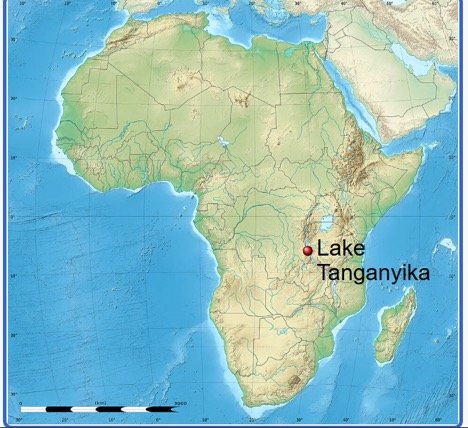
Four countries — Burundi, the DRC, Tanzania, and Zambia — border Lake Tanganyika.
The DRC and Tanzania’s geographical boundaries take up most of the coastlines giving them the longest maritime borders on the lake. Although Lake Tanganyika is one of the world’s richest freshwater ecosystems, in terms of fisheries, clean water, and transportation, the nations sharing the Lake Tanganyika basin are among the poorest in the world, according to the United Nations Human Development Index.
According to the Tanzania Ports Authority, the Kigoma port is connected to road and railway infrastructure that supports intra-regional shipping operations between the various countries around Lake Tanganyika.
The Lake Tanganyika Authority (LTA) signed a Memo of Understanding in August that reinforces bilateral trade cooperation between the governments of Tanzania and the DRC for enhanced regional connectivity through Lake Tanganyika.
China enters the picture
Jacob Mosenda, a journalist with The Citizen, Tanzania’s leading English-language newspaper, noted that the expansion of this trade corridor will serve as a vital trade artery between eastern DRC and the port of Dar es Salaam in Tanzania. “Previously, much of the cargo used alternative overland routes, including the Tunduma border crossing,” Mosenda pointed out.) in a July 20 article.
The Tunduma border is now the most vital international trade link between Tanzania and Zambia as well as other points between Southern and Eastern Africa due to its more advanced regional infrastructure. However, this is likely to change as Kigoma Port’s total capacity is expected to increase from 800,000 to 2 million metric tons of cargo on an annual basis because of the Lake Tanganyika trade corridor expansion.
China’s growing presence
China’s Zijin Mining, one of the largest cobalt, lithium and copper miners, is positioning itself to become a conduit for the DRC’s critical minerals to the rest of the world market.
Qiu Guozhu, vice-president of China’s Zijin Mining said that, in addition to minerals, “this project will unlock the trade artery connecting Central, East Asia and Africa.”
The company calls this a “multimodal water-land corridor” linking previously land-locked parts of Tanzania and the DRC with infrastructure that leads to the ports of Dar es Salaam. “This multimodal water-land corridor will dramatically enhance regional logistics efficiency and inject powerful momentum into the economic development of Tanzania and its neighboring countries,” Qiu Guozhu said during a meeting with Tanzanian President Samia Suluhu Hassan on July 20.
The Chinese government and its state-owned companies have already backed strategic trade corridor projects on the African continent, including the TAZARA Railway Revitalisation Project between Tanzania and Zambia.
Lauren Johnston, a researcher with the South African Institute of International Affairs (SAIAS), noted that Tanzania’s importance.) to the Global South will not be overlooked by China’s President Xi Jinping. She pointed out in a September 2025 report that China and Africa were “focused on realising their own development goals and doing so through strength, unity and cooperation.”
Xi also has “emphasised that such unity had in the past helped China and African nations to overcome adversity together,” Johnston wrote.
On the other hand, there are additional concerns revolving around China’s long-term strategy in Africa, such as the threats from China’s push into digitalisation strategies, which have become a new concern regarding Artificial Intelligence deployment and digital sovereignty.
A leading voice on the topic of digital sovereignty in Africa is Bulelani Jili, an assistant professor at Georgetown University in Washington.
He discussed this problem on The China in Africa Podcast: “A lot of the time, within the African context, when people are talking about data centers, they are really talking about procuring the services of an external party, in many instances a Chinese party, to help build out that requisite infrastructure,” he said.
The Tanzanian government has shown that it would like to bring both China and the United States into its critical minerals trade. The Lake Tanganyika trade corridor is going to likely be the most important trade corridor linking the DRC and Tanzania if realised.