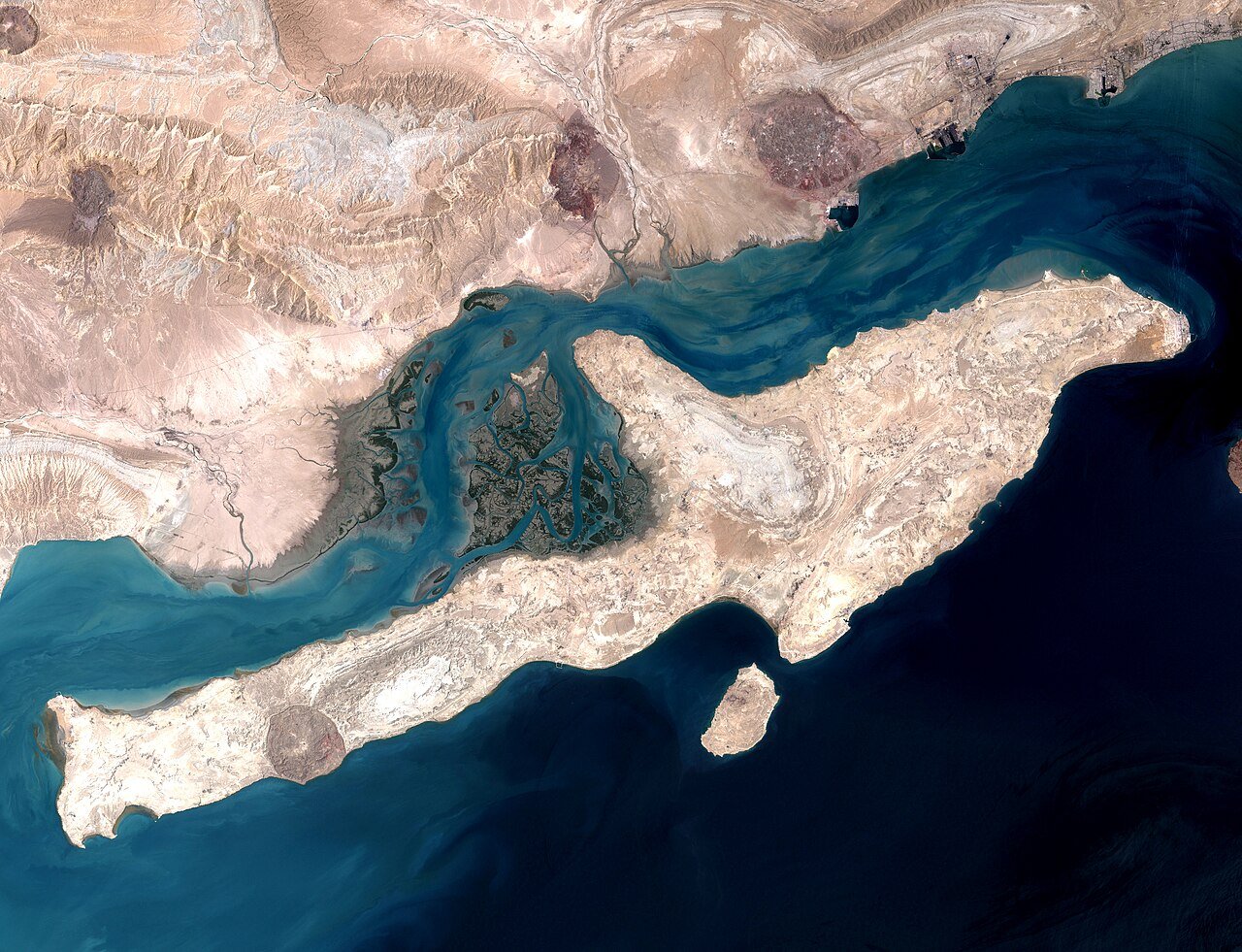
The closure of the Strait of Hormuz is dragging unarmed civilians, like seafarers, into the geopolitical conflict, causing neutral vessels to become trapped in the Strait despite their having no relevance to the war. When it comes to diplomatic negotiations, experts worry these civilians are of secondary concern.
While governments focus on military and diplomatic battles, the current Iran-US-Israel conflict has turned thousands of ordinary civilian seafarers into unintended victims.
Psychological Pressure
IMO Secretary-General Arsenio Dominguez has urged member states and industry representatives to support efforts to ease the situation. “I spoke to a seafarer who was trapped in the Persian Gulf for more than six weeks,” he told delegates during an informal briefing. “Aside from the exhaustion and toll on mental health, they feel invisible, as if they are not valued. There is much more we need to do.”
Alexandros Lignos, Senior Maritime Operations Leader and Port Captain, told Atlas Broadcasting he has seen crews “effectively forgotten or left waiting for too long.” He stressed, “Seafarers are not soldiers. We are not trained for war, to kill, or to carry weapons. We are ordinary civilians doing a professional job at sea.” Lignos explained that prolonged exposure to missiles, military threats, and isolation is causing deep trauma.
Commercial shipping has also come under direct attack. Since the beginning of the conflict, the IMO has recorded 19 attacks on vessels in the Strait, while at least 41 incidents have been reported across the Arabian Gulf, Strait of Hormuz, and Gulf of Oman. Many vessels have been targeted, detained, or used as political tools, even though their crews are civilians.
Flow of Requests
In response to this escalating crisis, a surge of urgent requests for assistance has emerged from the stranded vessels. Vessels have been resupplied with food, water, and fuel by companies operating out of Saudi Arabia and Oman, with Saudi authorities working alongside the IMO to share contact details with the industry.
The International Transport Workers’ Federation (ITF), an IMO partner representing seafarers, said it has received more than 1,000 emails from distressed crew members seeking better onboard conditions and repatriation.
Mohamed Arrachedi, ITF FOC Network Coordinator for the Arab World and Iran, told Atlas Broadcasting that each case is handled ship by ship. “We check the vessel’s location, contact the owners and managers, and ask for their plan to pay wages and repatriate crew under the Maritime Labour Convention.” He noted that the ITF is receiving 7 to 10 new cases daily, most involving repatriation, unpaid wages, compensation for sailing in high-risk war zones, and shortages of food and water.
Arrachedi recalled one seafarer who escaped a vessel heading to Iran after reaching Oman. “Management would not disembark him, so he went to the police asking for protection. He had not been paid for eight months.”
“These are not normal requests,” he added. “They come with a huge mental burden — calls from people in total distress who cannot sleep, who sleep in their clothes in case of an alarm. Even those we’ve helped at home still wake up thinking they are on the vessel. When this is over, addressing seafarers’ mental health will be a major task.”
Flaws in the System
Despite the intensive efforts by the IMO, the ITF, and regional states to manage the surge of distress calls, experts say the international maritime response system has serious limitations.
“There are hard limits to what they can achieve, due to a lack of jurisdiction over trapped vessels and regional tensions over who can operate and support crews,” said Steven Jones, Founder of the Seafarers Happiness Index. “Governments around the Gulf need to establish a coordinated humanitarian framework for provisions, medical access, and eventual crew extraction,” he told Atlas Broadcasting.
Jones noted that while frameworks such as the Maritime Labour Convention address ordinary commercial failures and individual abandonments, “they are not designed for thousands of seafarers trapped in an active conflict zone.”
“The MLC depends on flag states to ensure wages, repatriation, and welfare,” he explained, “but many of the vessels trapped in the Gulf operate under open registries that have no effective mechanism to enforce responsibility.”
Diplomatic Efforts
As diplomatic makeovers intensify between the conflicting parties, experts worry that the well-being of the 20,000 stranded seafarers remains a secondary concern rather than a humanitarian priority.
Jones explained that the US blockade on one side and Iran’s closure of the Strait on the other have left regional powers reluctant to open corridors or ease inspections, fearing they will be seen as taking sides. “The United States views pressure on Iranian exports as leverage, while Iran regards the immobilized fleet as proof of its power to disrupt global trade. As long as both sides view maritime paralysis as strategically useful, the welfare of the crews becomes secondary in negotiations,” he said.
India, Bangladesh, the Philippines, China, and several African and Southeast Asian states all have citizens trapped on these ships. “Each government is pushing for safety guarantees or evacuation options. These overlapping demands complicate any unified negotiating channel and slow the diplomatic machinery down,” Jones added.
Lignos said that all parties share responsibility when civilians are left trapped in danger, regardless of whether they see themselves as attackers, defenders, or protectors of national interests. “Seafarer protection should be separated from the military and political logic of the conflict,” he said. “The people on board merchant vessels are not negotiating tools, and they should not be used as leverage by any side. Unfortunately, this is exactly what is happening right now in Hormuz.”
Arrachedi stressed that seafarers must be protected regardless of their religion, origin, or location. “The ITF is not a party to the conflict. These civilian workers did not provoke the war and cannot avoid its consequences.” He further emphasized, “Seafarers are vital to regional and global economies, so the least governments and societies can do is work together to prioritize their physical safety and integrity. Any peace process or plan should explicitly guarantee the protection of seafarers.”