Regional escalation is deepening Gaza’s suffering and potentially blocking pathways to reconstruction, governance reform, and lasting peace for two million Palestinians, all this under shifting media attention away from the cause.
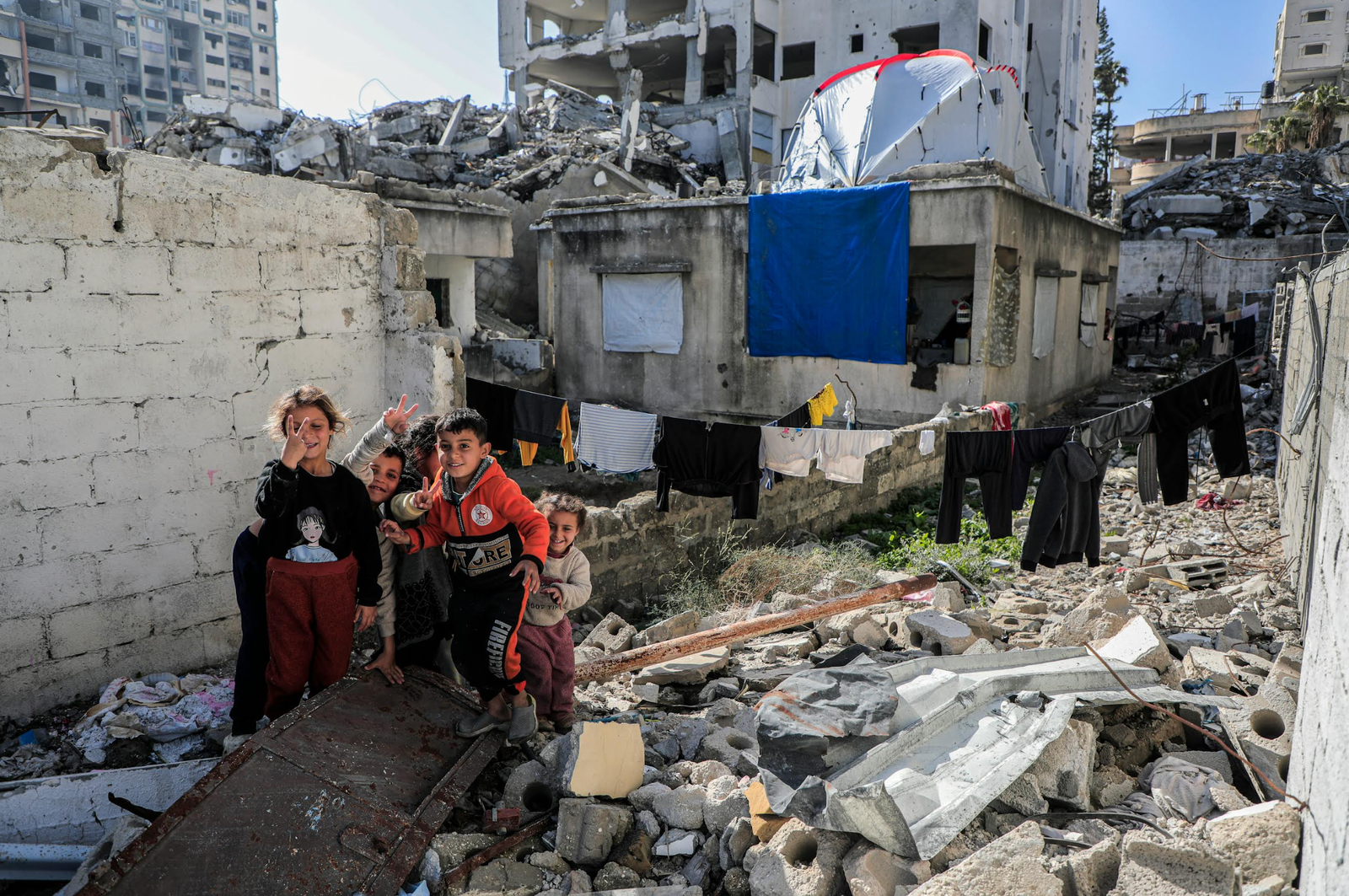
Eight months into the ceasefire, Gazans are still living in tent camps amidst rubble, health crisis, and food shortages, with aid dropping and priorities shifting amidst the Iran-US war regional tensions.
While the ceasefire allowed Gaza's humanitarian response to avert famine, restore healthcare and water services, clear debris, and improve access to aid, many of these gains remain fragile and postponed amid funding shortages and renewed regional instability.
Nader Hashemi, Associate Professor of Middle East and Islamic Politics at Georgetown University, noted that escalations had "sucked all the oxygen out of the room" that previously had been focused on the war in Gaza.
“Iran now controls the Strait of Hormuz, and there are going to be long, protracted negotiations over Iran’s nuclear program, so this story is going to continue to dominate the news,” he told Atlas Broadcasting.
Despite Israeli strikes on Gaza continuing, killing 936 people since the start of the ceasefire, Omar Shaban, CEO/Founder of Palthink for Strategic Studies, says media coverage is heavily focused on the US-Iran war as a major development due to its immediate economic impacts on aviation and gas.
Rising costs and supply constraints have fuelled food shortages, as regional instability has increased transport, insurance, and procurement costs for humanitarian agencies operating in Gaza and the wider region. At the same time, untreated waste sites in the city have led to contamination, infestation, and disease.
While there is an immense need for Palestinian-led governance, institutional reform, security arrangements, and reconstruction mechanisms, Dalal Iriqat, Associate Professor of Diplomacy at Arab American University and Columnist at Al-Quds Newspaper, stressed that the escalation freezes such planning.
The funding needed
Recovery and reconstruction needs in Gaza are estimated at $71.4 billion over the next decade, including $26.3 billion in the first 18 months to restore essential services, rebuild critical infrastructure, and support economic recovery. Only 10% of the required funding has been secured as of April 2026.
Although countries participating in Donald Trump's Board of Peace have pledged more than $17 billion for Gaza reconstruction, with over $7 billion from Gulf countries and other partners, the initiative has received only $23 million to fund operations, highlighting the gap between commitments and actual reconstruction funding.
"I don't see this whole peace and reconstruction plan in Gaza going forward," Hashemi said. "I don’t think that’s what the Israelis are serious about and want, and Gulf countries that were supposed to pay the bills now have different priorities. Their economies have been shattered."
Iriqat stresses that delayed aid, rising costs, and complex logistics "give donors another reason to postpone political decisions." However, concerns extend beyond humanitarian aid. Diplomats also warned that delays to political agreements could entrench Gaza's fragmentation.
The Board of Peace's lead envoy for Gaza warned the U.N. Security Council that the enclave's current division could become permanent, leaving more than 2 million people crowded into less than half its territory, unless a ceasefire takes hold.
"Gazans' future is very uncertain," Hashemi noted. "There's no reason to believe things will change anytime soon. Their challenge is just to try and survive, hoping that some opportunity will emerge."
Rebuilding
Amidst a lack of attention, funding, and diplomacy, experts stress that Gazans face prolonged hardship unless Palestinian unity and renewed international commitment emerge.
For Gazans, "uncertainty means continued displacement, destroyed homes, unemployment, and loss of dignity," Iriqat said, stressing the importance of Gaza’s international reprioritisation through a Palestinian political framework, accountability, and a clear end to occupation-related restrictions.
Shaban highlighted the need for unity and new election leadership, changing the “system that runs the Palestinian Authority now.”
"Palestinians need to unite to propose new ideas and election leadership, changing the system that runs the Palestinian Authority now," he said. "Hamas should make more compromises, and the Arab League should be heavily involved."
Hashemi thinks a major political development in the region is needed to destabilise authoritarian regimes.
“[Other than] a change in the politics of the region, or an election in the United States where someone serious about Gaza comes to office from the left wing of the Democratic Party – I don't see anything changing in a positive direction that can alleviate the suffering of the Palestinians,” he said.