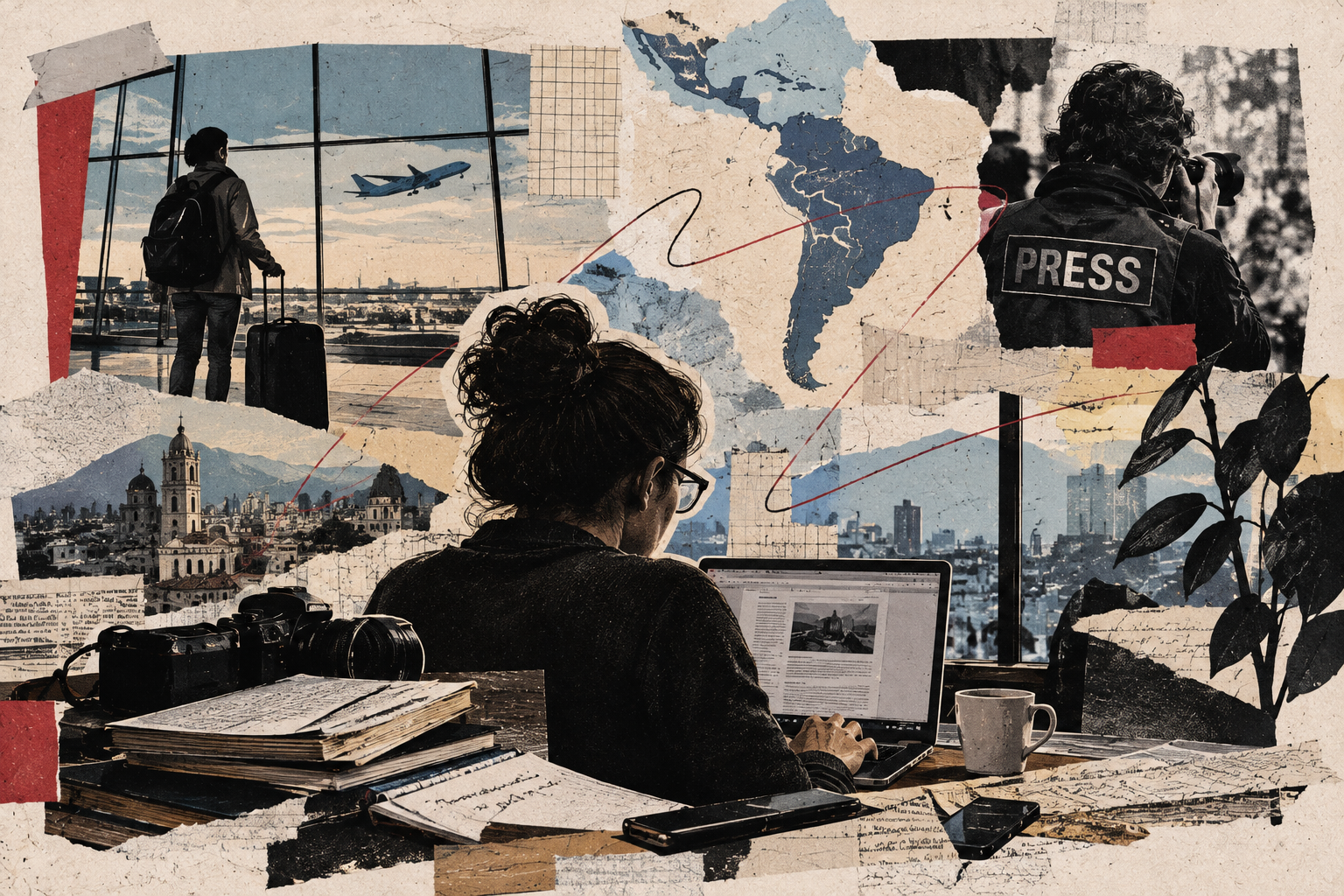
Between 2021 and 2025, Reporters Without Borders supported 1,468 journalists from more than 60 countries who had been forced to flee threats or faced imprisonment or the risk of death. The organisation reported that the number of countries from which journalists fled and received its assistance doubled, from 19 in 2021 to 40 in 2025. The figures represent journalists Reporters Without Borders assisted, not a comprehensive count of everyone forced into exile. The risks also extend into the digital sphere. A global survey published by UNESCO and UN Women in December 2025 found that 75 percent of the 354 women journalists surveyed had experienced online violence related to their work. Forty-two percent said online attacks had been linked to offline abuse, harassment, or assault. These findings describe the survey respondents and should not be interpreted as a percentage of all journalists worldwide.
Harassment against journalists takes many forms, including online abuse, intimidation, threats, legal pressure, and physical violence. No single global database captures every incident, but international organisations document aspects of the problem, revealing the scale of the risks and their consequences. The New York-based Committee to Protect Journalists (CPJ) documented 129 journalists and media workers killed worldwide in 2025, the highest annual total since its records began in 1992. In a separate annual census, CPJ counted 330 journalists imprisoned for their work as of Dec. 1, 2025. Killings, imprisonment, online harassment, and forced exile are distinct categories, and they cannot be combined into a single global count of journalists who have experienced harassment.
The situation across the Americas
The Inter American Press Association (IAPA), known in Spanish as the Sociedad Interamericana de Prensa (SIP), has documented a range of pressures affecting journalists and media outlets across the hemisphere. In its October 2025 report, the organisation described official stigmatisation, judicial harassment, legal restrictions, violence, impunity, forced displacement, economic pressure, and digital censorship. The SIP reported that stigmatisation of the press by state actors had been documented in at least 14 of the 24 countries it monitored during the preceding “semester.”
More recent findings underline that these risks persist. In its 82nd General Assembly conclusions, published on Oct. 25, the SIP reported that at least 210 aggressions against the press had been recorded in El Salvador between January and mid-July. It also reported that at least 40 journalists had been forced into exile. In Nicaragua, more than 300 journalists and media workers have gone into exile since 2018, according to the same report.
The SIP's latest regional review also recorded journalist killings during the preceding six-month period: two in Colombia, three in Mexico, two in Guatemala, one in Peru and one in Haiti. In Brazil, the organisation reported 7,030 digital attacks against journalists, particularly women, over a four-week period. These figures refer to different countries, periods and types of incidents; they illustrate the regional picture rather than a single comparable total.
In late October, a Central American journalist decided to leave her country. She traveled through another country before arriving in Spain the following day, seeking protection because she feared being arrested if she returned home.
Her arrival did not immediately resolve her situation. She spent more than a week in an airport refuge, waiting for a response that would determine whether she could remain in Spain or face the possibility of returning to the country she had left.
Eventually, she stayed.
She left behind her family, her home and the life she had built. She had completed her university education and was pursuing a career in journalism. She was not leaving because she had abandoned her profession; she was leaving because she feared what might happen if she remained.
Today, she continues reporting on her home country from abroad, separated from her family. Her identity and identifying details are withheld for security reasons.
Her experience illustrates a consequence that statistics alone cannot convey: exile can mean losing the everyday presence of family, leaving behind a home and rebuilding a life in an unfamiliar place while trying to continue reporting.
When an Entire Newsroom Leaves
The decision to leave can also affect entire media organisations.
In one small Central American country, an independent newsroom called El Faro, from El Salvador, faced growing pressure and fears of possible arrest. The outlet moved its operations abroad, and most of its journalists left the country. Some relocated to Spain, Mexico, and Costa Rica. Others have not publicly disclosed their whereabouts.
The departure of an entire newsroom can have consequences beyond the journalists themselves. When reporters can no longer work safely in the country they cover, the public risks losing access to investigations, scrutiny of those in power and accounts of events that might otherwise remain undocumented.
The SIP's reporting on journalists forced into exile in El Salvador and Nicaragua places these individual experiences within a wider regional pattern.
Leaving a country does not necessarily end the uncertainty faced by journalists.
On Jan. 2, 2026, Salvadoran photojournalist Diego Andrés Rosa Rosales was detained in Seville, Spain, after an Interpol red notice requested by Salvadoran authorities was activated while he was seeking international protection. A Spanish judge ordered his provisional release on Jan. 3 while awaiting a possible formal extradition request, according to RTVE.
His case illustrates how journalists who leave their countries may continue to face legal uncertainty abroad. His provisional release was not, by itself, a decision granting asylum or resolving the extradition question.
The Public's Right to Know
The reports from RSF, UNESCO, CPJ and the SIP describe different dimensions of the pressure facing journalists. Some experience online abuse or intimidation. Others are imprisoned, killed, or forced to leave their countries. These categories cannot be combined into a single global count, but they help explain the range of risks involved.
For journalists who go into exile, the consequences extend beyond their professional lives. They may leave behind family members, homes, careers, and communities while trying to continue reporting from elsewhere.
The question is therefore not only how many journalists face threats worldwide. It is also what happens to the public's right to information when the people responsible for providing it can no longer safely do their jobs and when continuing to report means leaving home.