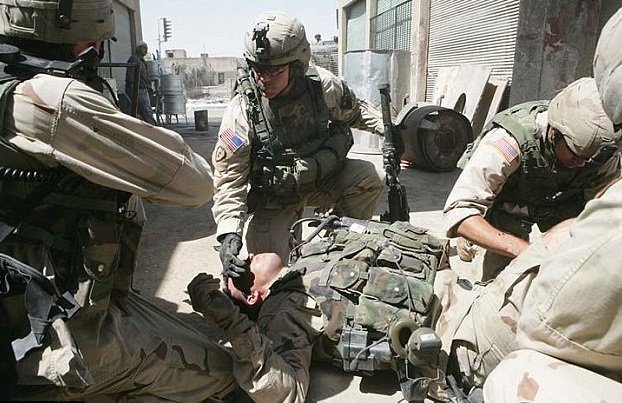
The issue of military personnel returning from battle and having to deal with physical injuries, post-traumatic stress disorder, and other mental health issues without proper treatment has been well reported by the Washington Post and others. The current Trump administration's cutbacks have renewed concerns about what help is available and whether enough professionals are available to provide it.
After a war or other armed conflict, the fighting itself might be over, but for some veterans, another battle might have only just begun. The U.S. government has invested billions of dollars in veterans' health care, including mental health services, therapists, and organizations that provide help. Despite all the money spent, there are still major concerns over whether or not veterans can get access to timely and effective mental-health treatment.
Under President Donald Trump’s current administration, the federal workforce has been significantly reduced, including within the Department of Veterans Affairs, raising questions about the future of its services.
Jessica LeTourneau is a psychotherapist based in Frederick, Md., where she and her husband run New Perspectives Counseling, which specializes in the treatment of military veterans.
Trauma is very individualistic, LeTourneau said during a Sept. 24 interview. Emphasizing that there is certainly not a one-method, one-medication-benefits-all scenario, she pointed out that just because a group of veterans goes through the same experience doesn't mean that everyone is going to have the same or similar reactions. She said the impact of Post-Traumatic Stress Disorder (PTSD) tends to cause returning veterans to enter a shutdown state. This reaction ensures that the brain’s ‘fight or flight' mechanism gets truncated.
In war, it wasn’t. Instead, it was often what kept people alive. The shutdown state isn’t a conscious act; it’s based on survival.
The freezing state can cause military personnel and first responders to “feel alone, unsafe, and that there’s no one they can trust. So, at the time that freezing responses occur, a person is more likely to develop a post-traumatic reaction if they don’t get support in time,” Letourneau said.
She stressed that “if a person has adverse childhood experiences, or they have been traumatized in the past, they’re more likely to develop a post-traumatic stress reaction."
Being on Duty
Military and first responders on duty are thrown into a constant state of readiness. The hypervigilance can carry on through everyday tasks: going to the grocery store, to the park, even just spending time with family and friends. Everything that felt so routine before being thrust into combat all of a sudden doesn’t feel the same.
Changing Societal Attitudes
LeTourneau talked about a client whose friends made fun of him for asking for psychiatric help in the 1980s.
“It was such a different time as far as attitudes were toward seeking professional counseling,” LeTourneau said.
While the stigma might have lessened and mental-health services have become more available, she believes more therapists need the specialized training required to understand what veterans must have to be treated effectively.
“Some therapists may not understand the chain of command, what happens on service calls, deployment, and adjustment issues, or the transition back to civilian life,” LeTourneau said.
In 2008, the staff of the Washington Post was awarded a Pulitzer Prize for public service for detailing the inadequate treatment wounded service members were receiving at Walter Reed Army Medical Center in Bethesda, Md.
The investigation, published in 2007, led to more government oversight and calls for accountability in the treatment of veterans.
But nearly 20 years later, cutbacks under the Biden and current Trump administration led to 62,000 veterans leaving the federal workforce between September 2024 and December 2025. This is nearly a 10 percent decline.
A Center on Budget and Policy Priorities report published in February said “more than 1,000 psychologists and social workers” left employment with the Veterans Administration in 2025.
The Trump administration has billed these reductions as an effort to make the government more efficient while also reducing government spending.
But cutting the number of mental-health professionals on the VA staff raises concerns about veterans’ access to needed specialized treatment.
Veterans experience a specific kind of culture and trauma during their deployment, and reducing the number of employees hired to help them raises the question of whether or not the VA can maintain the necessary access that veterans deserve to receive.
Honoring veterans is more than thanking them for their service; it’s ensuring they can access appropriate care, both physical and mental after returning from conflict.