Trade tensions, energy security, Russia, Iran, and Washington’s renewed ties with Pakistan are reshaping India’s strategic choices.
The Trump-Modi relationship is facing a new test. As India balances ties with the U.S., Russia, Iran, Europe, and Pakistan, South Asia’s geopolitical landscape is changing.
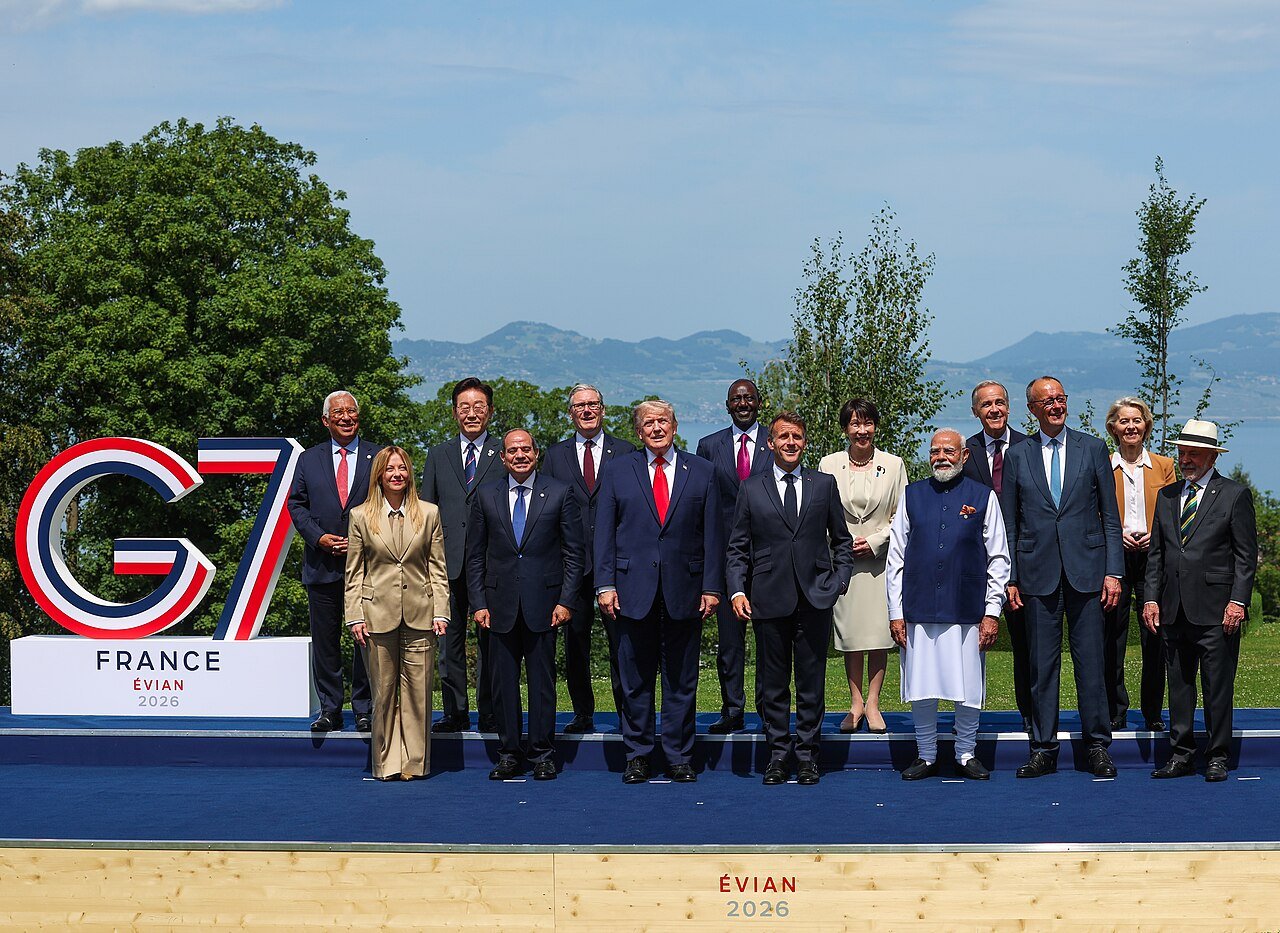
The underlying tensions between India and the United States were on full display during a bilateral meeting held on the sidelines of the mid-June G7 summit in France.
U.S. President Donald Trump’s glowing praise of India Prime Minister Narendra Modi and guarantee that America would defend India’s security did not mask the discomfort over the estranged ties between the two countries.
The killing of three Indian seafarers on June 12 by U.S. military strikes had caused a political uproar against the Modi government and snowballed into the latest flashpoint in the widening feud. New Delhi called on the United States to immediately end such attacks on commercial ships.
This was the first meeting between the two leaders in over a year, following a series of tense events that plunged India-U.S. ties to the lowest point. From 50 percent tariffs for buying oil and weapons from Russia to additional duties on imported goods, curtailing Indian immigration with tough visa restrictions and even removing the Indo designation from the military Pacific Command, U.S.-India ties underwent a sweeping change.
New Delhi maintained a defiant stance against the U.S. aggression.
At the G7 interaction, Modi emphasised that the safety of the Indian seafarers and keeping the Strait of Hormuz free topped New Delhi's agenda. The narrow waterway is one of the world's most critical energy chokepoints and a vital route for as much as two-thirds of India's oil imports, according to Logisticsinsider.in.
The military escalation between the United States and Iran over controlling the Hormuz Strait dealt a major blow to India's maritime and energy security. As the conflict expanded to the wider Gulf region, India inevitably got caught in the crossfire. At least 16 Indians, including 10 seafarers, have been killed in actions related to the conflict, according to India’s Ministry of External Affairs. Another 12 lost their lives in an unrelated accident on June 21 at the Ras Laffan Gas Facility in Qatar.
The U.S.-Israeli war against Iran caught India by surprise, as New Delhi found itself in a fraught geopolitical landscape. The timing was particularly awkward for Modi, who had recently returned from a high-profile state visit to Israel, where he was honoured at the Knesset.
The joint military campaign by the United States and Israel against Iran launched on Feb. 28 targeted military and civilian infrastructure in Tehran and killed the supreme leader, Ayatollah Ali Khamenei. New Delhi maintained a notably restrained response to the military aggression. Statements from India’s Ministry of External Affairs omitted any reference to Khamenei's assassination or the U.S. missile attack on an elementary school in Minab that killed 156 people, including 120 children.
The March 4 sinking of the Iranian Navy warship IRIS Dena, which was returning home from a training exercise, by U.S. Navy torpedoes, killing 104 Iranian sailors off the coast of Sri Lanka, brought the consequences of the war closer to India’s shore. The attack, which foreign-policy scholars have described as a war crime, placed New Delhi in an increasingly difficult diplomatic position. Even as a member of the 11-nation BRICS platform, India refrained from formally condemning the attacks on Iran.
Caught between competing strategic interests, New Delhi adopted a neutral stance, as it continued to engage with both Washington and Tehran.
India-U.S. feud — Advantage Pakistan?
Amid the strained India-U.S. ties, Pakistan made a wild card entry on the international stage by taking the mantle of a peacemaker. Islamabad’s history of sponsoring terrorism became a secondary factor, as it led a shuttle diplomacy and hosted talks between the two warring countries.
The reversal in Pakistan’s diplomatic standing with the United States followed its concerted efforts to win Trump's trust and re-establish itself as a key strategic partner in Washington’s camp.
In 2025 after India launched missile strikes against terrorism and military sites in Pakistan and the two countries traded missiles and drones across the border, Islamabad rallied with Washington to de-escalate military tensions. While Modi declared Operation Sindoor as a strategic victory against Pakistan, Trump claimed that he brokered a ceasefire and that the India-Pakistan conflict was one of the eight wars he ended last year. According to Indian media, the U.S. president has publicly claimed over 90 times that he stopped the deadly military conflict between the two nations.
As New Delhi downplayed U.S. involvement and reiterated its historic stance against third- party mediation, Pakistan’s military leadership stepped up to credit Trump for stopping a potential nuclear war and saving millions of lives.
Armed with adulation and praise, Army chief Asim Munir’s recognition of Trump's strategic intervention landed him an invitation to the White House and earned him the moniker of "favourite field marshal," while Prime Minister Shehbaz Sharif nominated the U.S. president for the Nobel Peace Prize.
The United States approved a $686-million F-16 deal and enrolled Pakistan as a member of the Gaza Peace Plan. Pakistan is one of the few Muslim-majority countries to contribute troops to the proposed International Stabilisation Force for Gaza. It has reportedly offered the Trump administration exclusive access to its mineral resources and sought a U.S. $10 billion economic package in return for its role in facilitating negotiations.
India’s offset with EU Trade Deal
For decades, India tried to change the U.S. lens on Pakistan as a valuable strategic ally to the war on terrorism. New Delhi invested heavily in de-hyphenating bilateral ties, portraying India as an independent strategic partner while drawing attention to Pakistan's support for India-centric terrorist groups.
As Pakistan intends to benefit from the U.S. coalition of influence, its renewed ties have brought a new set of complications. The Pakistani-Saudi defence strategic partnership has put Islamabad at odds with Iran-backed Houthis attacking Saudi forces in the Red Sea. Pakistan’s diplomatic alignment with U.S.-Israel on the Gaza peace plan also could provoke fierce opposition from Islamist groups at home.
India's strategic autonomy has allowed it to have multiple allies with crossing interests. India continues to buy oil and weapons from Russia and Iran.
Trump’s policy has changed U.S. priorities in South Asia. America seems no longer interested in developing India as a strategic bulwark against China. But more through a transactional lens, which asks the key question: What does the U.S. gain from India?
As the U.S. trade deal standoff continues, India has sought to offset any losses with growing trade ties and geopolitical agreements with countries in the European Union. The free trade agreement, referred to as the Mother of all Deals, has empowered New Delhi to salvage the costs of Trump’s harsh measures.
Trump’s reversal on ties with India has exposed the limits of Modi's personal diplomacy in global geopolitics. For years, Bharatiya Janata Party (BJP) supporters had portrayed the Modi-Trump bromance as a defining strategic partnership; however, the U.S. military attacks, tariff war and cozying up with Pakistan have shifted the perception of India's position as an ally.
New Delhi cannot afford to lose the strategic gains it had painstakingly built over two decades with the United States. The clash of egos between Trump and Modi notwithstanding, both their governments remain invested in preserving the broader strategic partnership. The populist leaders know that personal differences aside, strategic compulsions and economic imperatives are likely to outweigh personal ego.