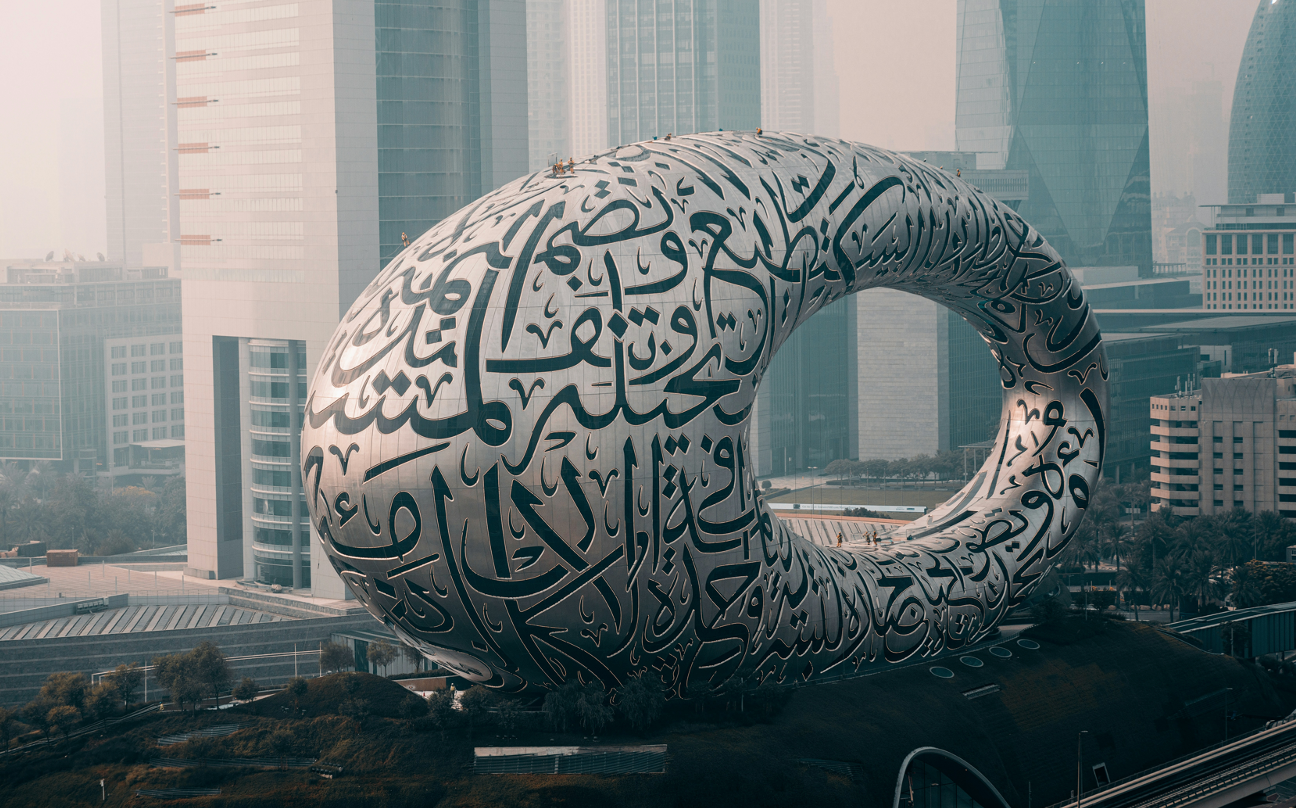
The U.S.-Iranian conflict exposed the UAE's vulnerabilities while highlighting its growing role in regional diplomacy, energy security and economic stability.
The feature explains how regional conflict reshaped the UAE's security priorities, energy strategy, and diplomatic role amid persistent geopolitical uncertainty.
“The regional war came rather unexpectedly for the GCC states, as they were barely informed or consulted about US-Israeli plans to attack Iran,” said Philipp Wagner, visiting fellow in the Middle East and North Africa programme at the European Council on Foreign Relations.
As a close US ally, the UAE’s military bases and those of America in the country became Iran’s military targets through drone and missile attacks, sparking further regional escalation and pulling the UAE and other Gulf states into the conflict.
The UAE’s vice president held an official call with Iran’s parliament speaker on April 15 to present the UAE’s diplomatic positions and further uphold dialogue. “The political power of such signalling must not be underestimated against the backdrop of regional escalation and military uncertainty,” Wagner said.
Sina Toossi, senior non-resident fellow at the Washington-based Center for International Policy, said “the conflict engulfed the Persian Gulf and broader region, destabilised global energy markets, pushed the Strait of Hormuz to the centre of an international crisis.”
“Gulf states’ long-standing fears that conflict with Iran would spread directly onto their territory and critical energy assets were borne out,” Toosi said.
Barakah plant
On May 17, drones targeting Abu Dhabi’s Barakah power plant raised further military and security concerns amid persistent regional tensions, with UAE-backed international statements condemning the drone attack, which caused a fire but no human casualties, reaffirming Barakah’s safety and calling for the protection of civilian nuclear facilities.
“The attack must be understood as a litmus test for nuclear safety in the UAE and for the resilience of the state’s energy system,” Wagner said. “The drone strike near the Barakah plant shows how nuclear facilities are regularly weaponised in military conflict, similar to Russia’s war in Ukraine.”
Built and partly operated with a South Korean consortium, the Barakah plant, which began working in August 2020, is the UAE’s first and only nuclear power plant — and the only operational nuclear power station on the Arabian Peninsula. With four reactors and an annual production of roughly 40 TWh (Terawatt hours) annually, it provides up to 25% of the UAE’s electricity needs, according to the Emirates Nuclear Energy Corporation.
“The facility is a central pillar of the UAE’s energy system,” Wagner said.
While the UAE relies on alternative sources of electricity generation, such as gas-fired power stations and expanding solar and wind capacity, Wagner stresses that “the symbolic dimension of the May 2026 drone attack should not be underestimated.”
“The UAE’s only nuclear power plant, which was seen as a stable and safe energy supplier, suddenly became part of military escalation,” he said. As the country considers additional nuclear power plants in the coming years, authorities and private investors are likely to reassess safety amid a fragile ceasefire with Iran and potential escalations.
“Reassessment of the resilience of the UAE’s domestic energy infrastructure, including electricity grids and power-generation facilities, focusing on the more distributed and flexible nature of solar and wind farms, which may be less vulnerable and dangerous targets in a potential future escalation than concentrated nuclear power plants,” Wagner explained.
The Strait of Hormuz impacts
The UAE’s real estate market, tourism, and its position as a global aviation hub were severely disrupted by the Strait of Hormuz tensions, with some insurance costs for cargo ships in the Gulf skyrocketing by more than 1,000 percent after the strait’s partial closure and several attacks against tankers, according to a Reuters report.
“They remain at a significantly elevated level to this day, as insurance companies point to contradictory statements from the U.S. and Iran regarding the opening of the Strait of Hormuz,” Wagner said.
Around 20% of the world’s oil and liquified natural gas (LNG) supply had passed through the Strait of Hormuz. However, after its partial closure, the UAE had to reduce its oil and gas outputs, as export routes were under attack and storage facilities were rapidly filling up, with an oil refinery in Fujairah’s industrial zone catching fire in May after nearby drone attacks.
Regardless, the country’s oil exports “could partly bypass the Strait of Hormuz through an on-land pipeline to the Fujairah port,” Wagner explained. The UAE has long been seen as an anchor of stability for global trade, logistics, and energy supply. Now, the recovery from the Iran attacks is still underway, with oil exports reaching almost 85% of the pre-war level in late June.
“Investors have partially regained confidence in sectors such as the UAE’s real estate and energy markets following the ceasefire, though it remains fragile,” Wagner added, highlighting how the UAE aims to consolidate its image in multilateral climate and energy diplomacy, with long-term projects in green energy production.
As the region looks ahead, Toossi thinks temporary ceasefires, interim agreements, or limited understandings may help reduce immediate dangers and create political space for broader diplomacy.
“But durable stabilisation will likely require a longer-term framework grounded in reciprocal restraint, institutionalised deconfliction, and the management rather than attempted elimination of geopolitical rivalry,” he noted.